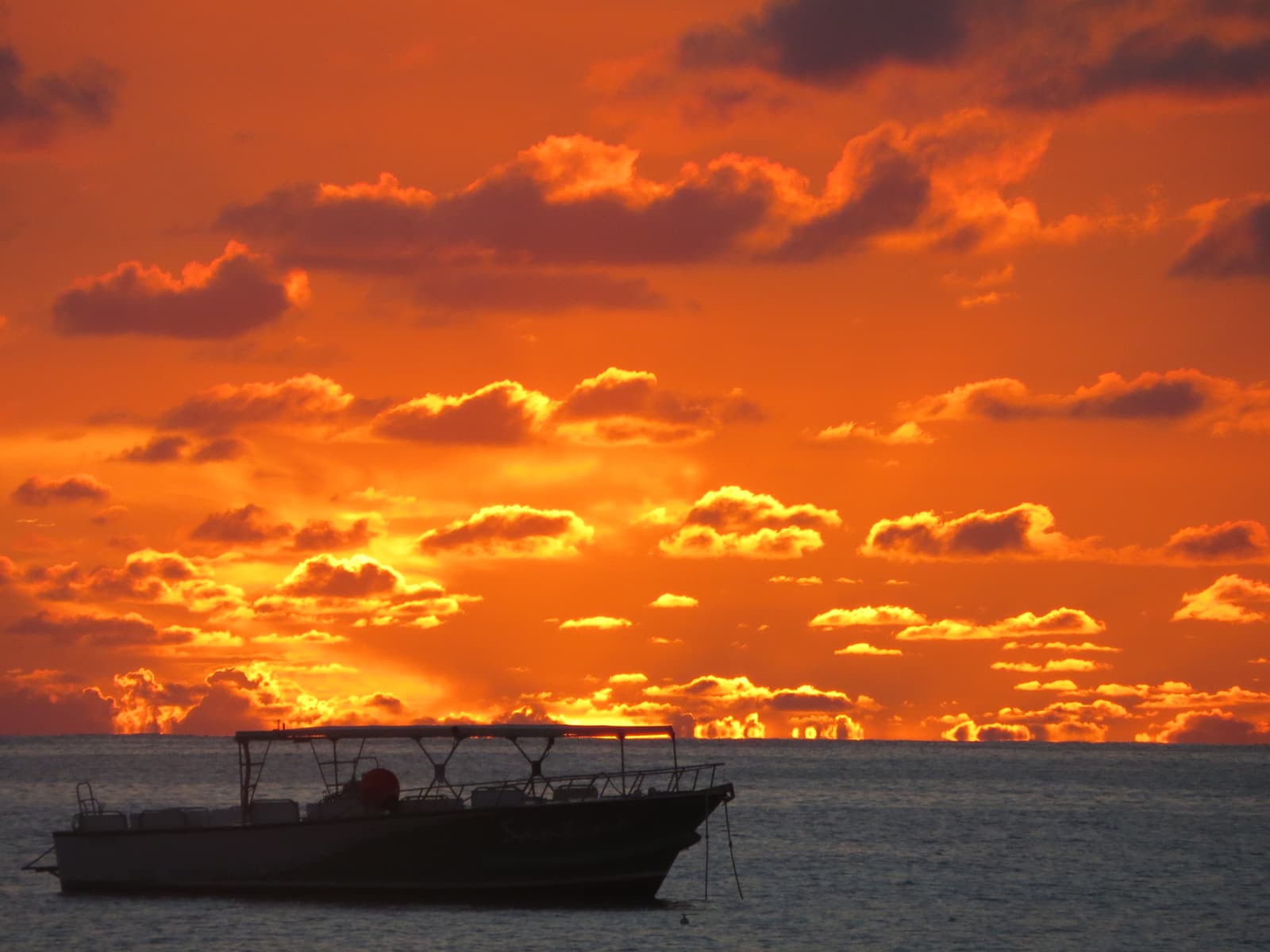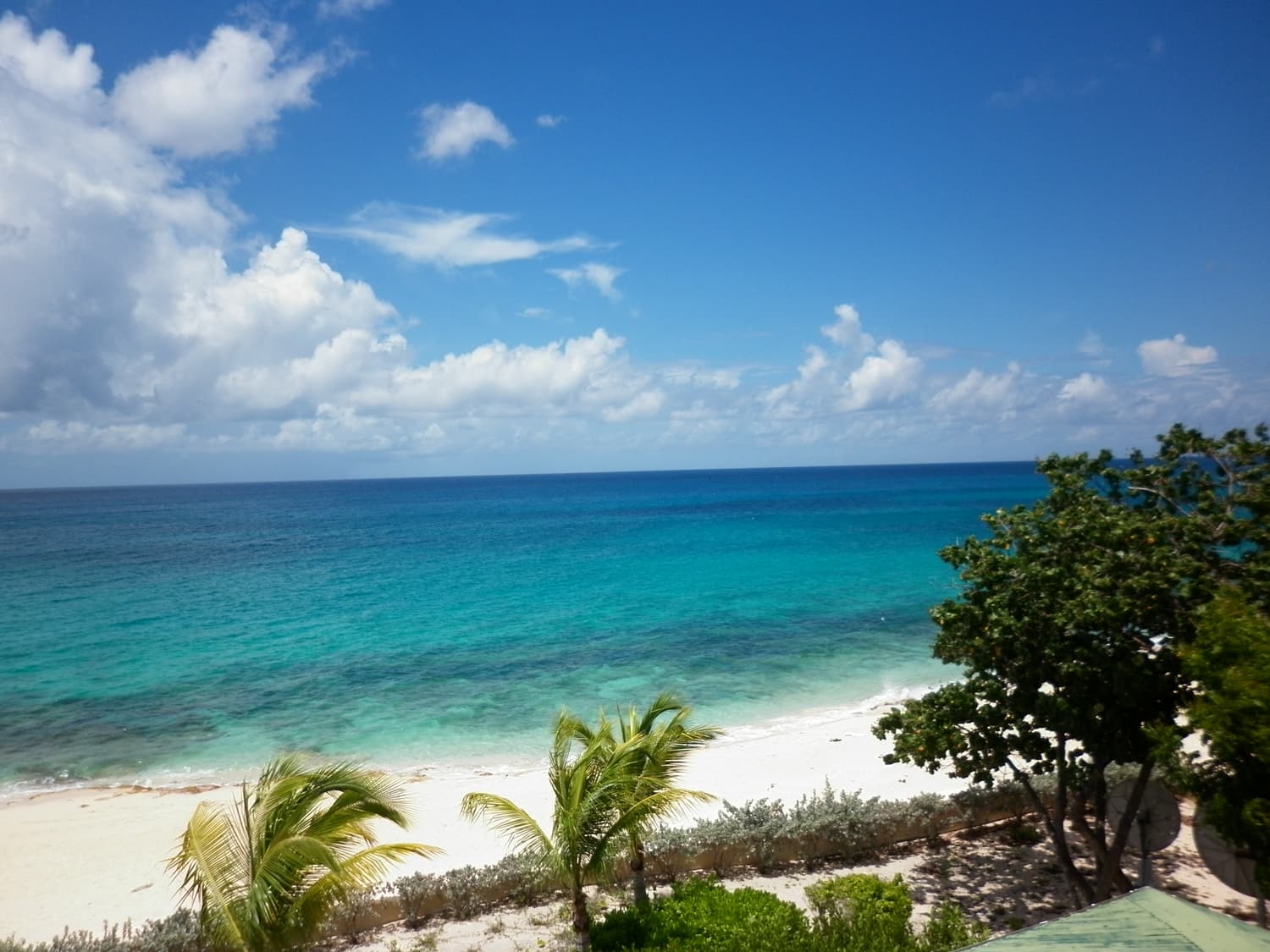
The island’s unofficial slogan promises 37 beaches, one for every square mile. Whether or not the arithmetic holds, the variety is real: within a half-hour drive you can choose between a town beach with bars, a wild Atlantic strand, a cove under cliffs, a lagoon as calm as a bath and a strip of sand under a landing airliner.
All beaches are public and free on both sides. What you pay for is comfort: a pair of loungers with an umbrella, rented from a vendor or beach club, usually with a drink included. The west and south coasts face the Caribbean and are generally calm; the east coast faces the Atlantic and the trade wind, with more surf, more breeze and, at times, sargassum.
Beach by beach
| Beach | Side | Best for | Facilities |
|---|---|---|---|
| Mullet Bay | Dutch, west | Swimming, all-round beauty, bodysurfing in winter | Chairs, beach shacks, parking |
| Maho Beach | Dutch, west | Plane-spotting | Bars at both ends; little space |
| Simpson Bay | Dutch, south | Long quiet walks, calm swimming | Few in the middle; bars at Kim Sha |
| Great Bay (Philipsburg) | Dutch, south | Cruise passengers, convenience | Boardwalk bars, chairs, water sports |
| Little Bay | Dutch, south | Families, easy snorkelling | Resort facilities, water-sports centre |
| Cupecoy | Dutch, west | Sunsets, cliffs, seclusion | Almost none; sand is seasonal |
| Dawn Beach | Dutch, east | Sunrise, snorkelling when calm | Resort beach bars |
| Orient Bay | French, east | Beach clubs, water sports, people-watching | Everything |
| Le Galion | French, east | Toddlers, learning to windsurf | Small beach bar, rentals |
| Pinel Island | French, north-east | Shallow water, day-trip atmosphere | Two restaurants in season, ferry |
| Grand Case | French, north-west | A swim before or after lunch | Beach bars, restaurants, lolos |
| Friar’s Bay | French, north-west | Families, calm water, low-key lunch | Two beach restaurants, chairs |
| Happy Bay | French, north-west | Getting away from everyone | None; 10-minute walk in |
| Baie Rouge | French, west | Scenery, snorkelling round the arch | Beach bars at the entrance |
| Baie Longue | French, west | Space, solitude, long walks | None |
| Anse Marcel | French, north | Calm cove, small children | Resort beach club, marina |
 Dutch side — Sint Maarten
 Philipsburg
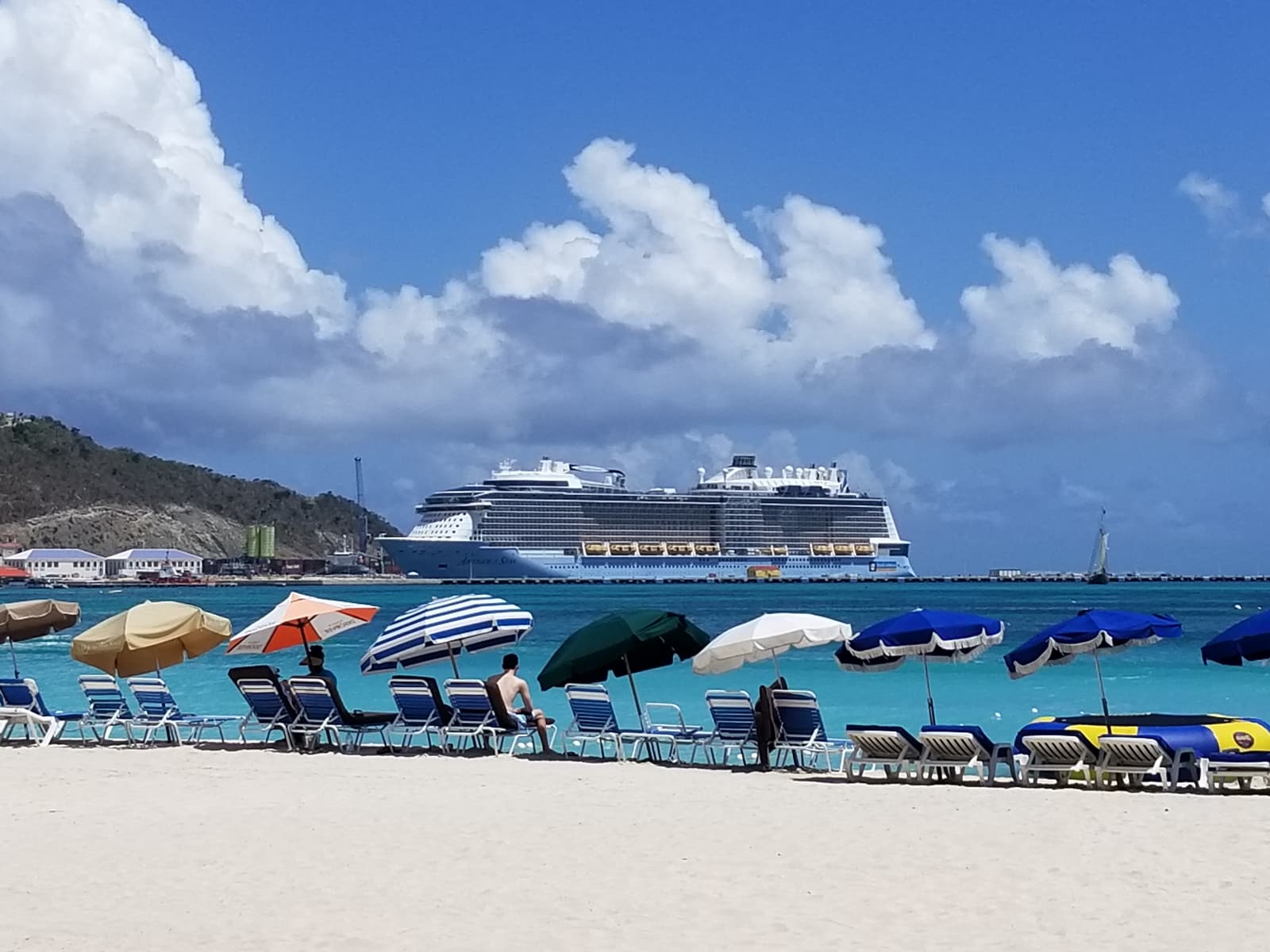
The Dutch-side capital: Front Street, the Great Bay boardwalk and the cruise port.
A four-street town on a sandbar between Great Bay and the Great Salt Pond, with duty-free shopping on Front Street, a long town beach, an 18th-century courthouse and the island’s cruise piers a short walk or water-taxi ride away.
 Dutch side — Sint Maarten
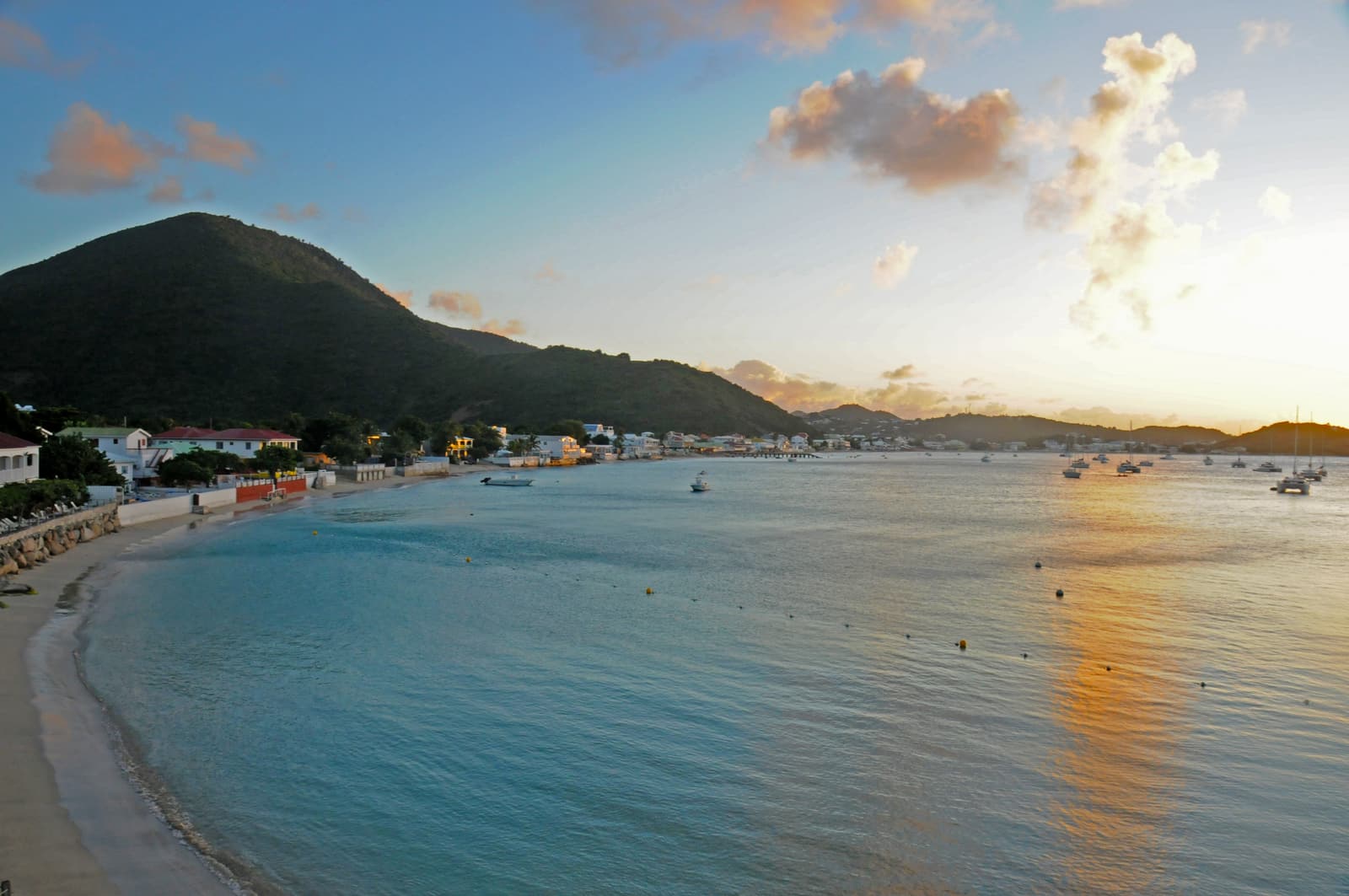
 Maho Beach
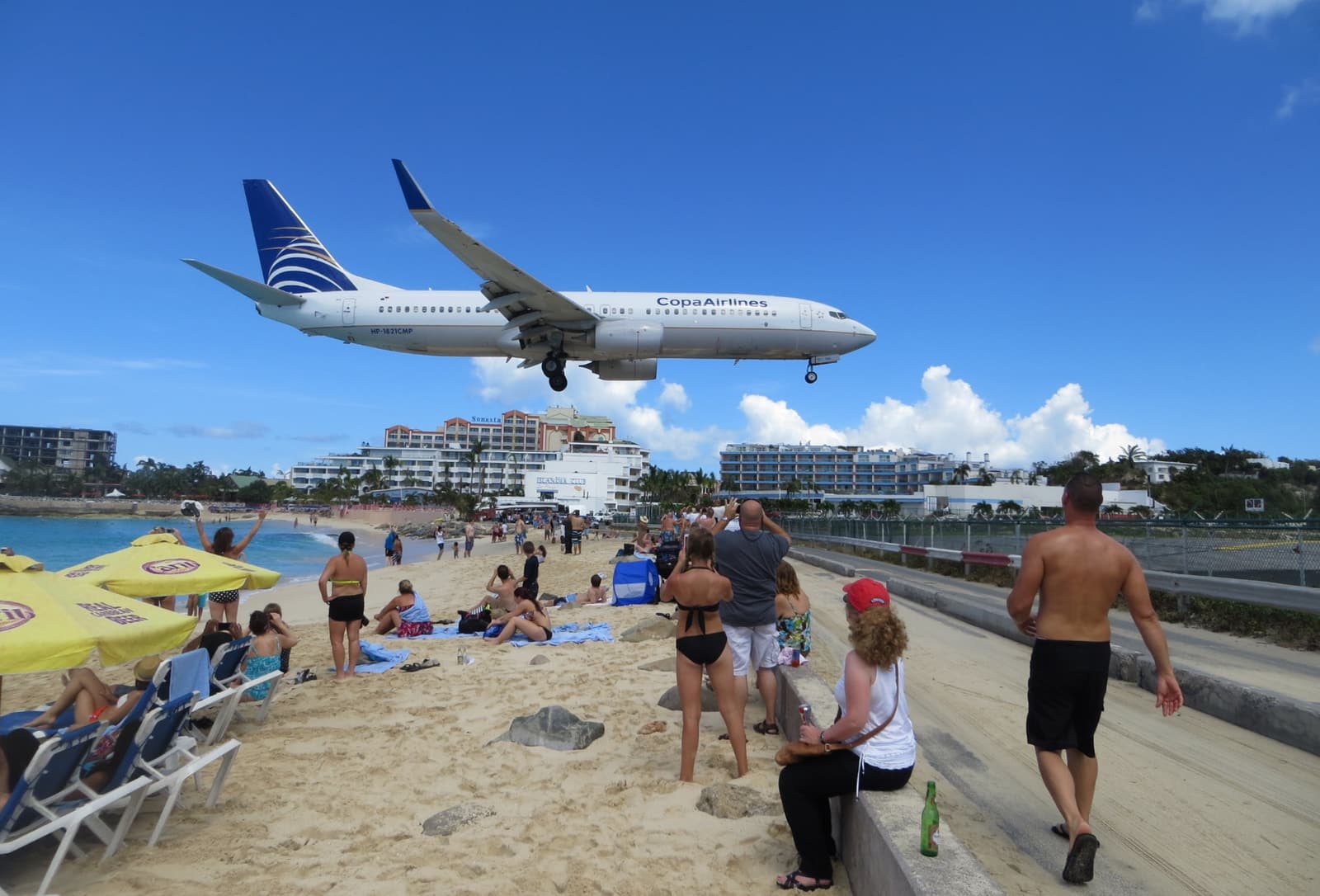
The beach at the end of the runway, where jets pass a few metres overhead.
A short strip of sand directly under the final approach to Princess Juliana International Airport. People come from all over the world to stand beneath landing airliners, check the arrivals board at the beach bar and swim between flights.
 French side — Saint-Martin
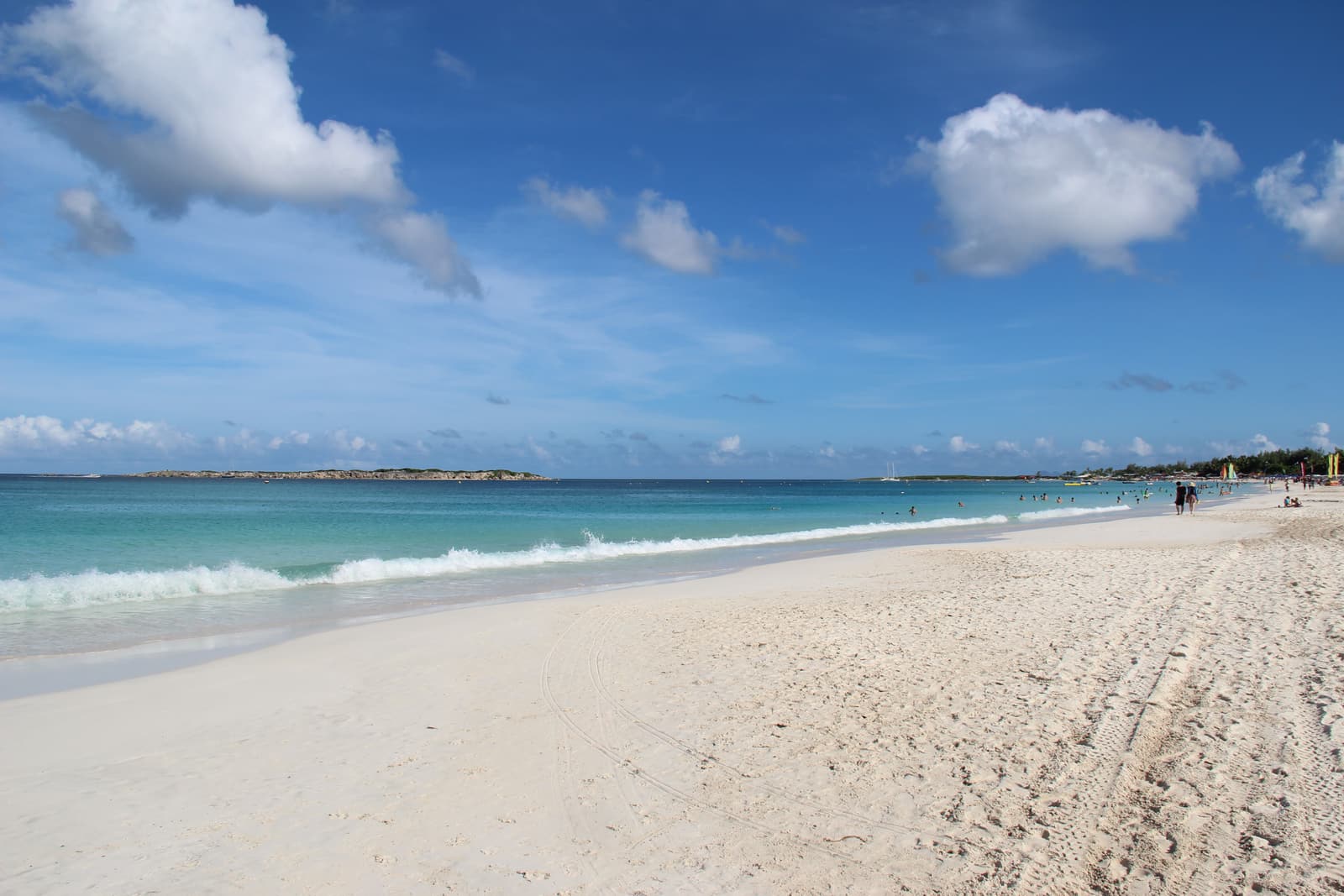
 Grand Case
One beachfront street, dozens of restaurants and the island’s famous lolos.
A fishing village on a calm bay that became the dining capital of the island: French and Creole restaurants shoulder to shoulder along the boulevard, open-air barbecue stands called lolos, and Creole Rock for snorkelling just offshore.
 French side — Saint-Martin
 Orient Bay
The French side’s big, breezy beach of clubs, water sports and long lunches.
Around two kilometres of pale sand on the Atlantic side, lined with beach clubs, restaurants and water-sports operators. Lively in the middle, quieter at the ends, with a long-established naturist section at the southern tip.
The Dutch side
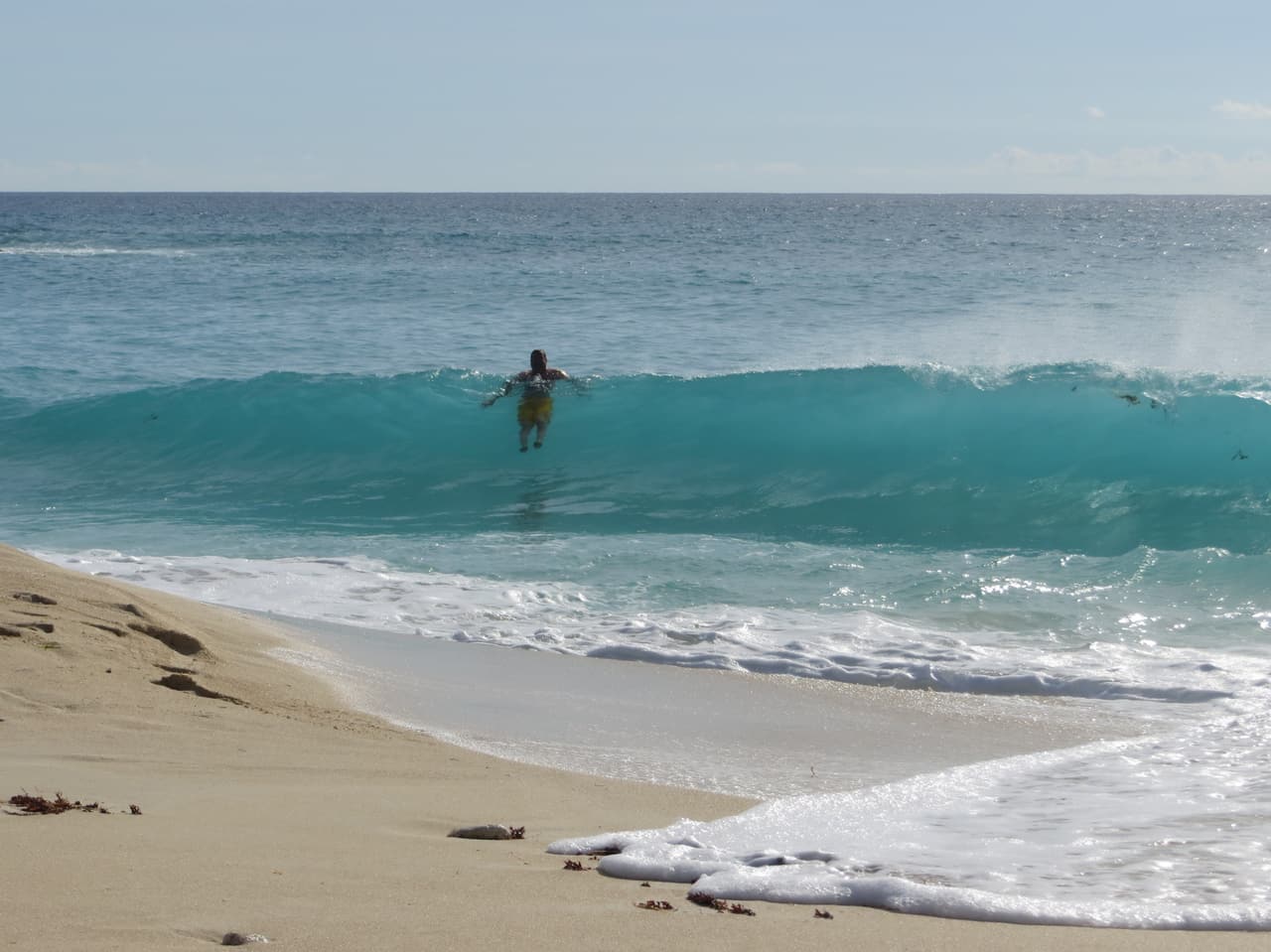
Mullet Bay
If you visit one Dutch-side beach for its own sake, make it this one: broad white sand, clear blue water, sea-grape trees and no buildings. Calm in summer, wavy in winter. Full details on our Mullet Bay page.
Maho
Small, steep and crowded, and nobody cares, because of what is overhead. Come for the midday arrivals, then go somewhere else to swim. See Maho Beach.
Simpson Bay and Kim Sha
Two kilometres of pale sand with remarkably few people on it, running alongside the airport. Kim Sha, at the eastern end, has the bars and the sunset crowd. See Simpson Bay.
Great Bay and Little Bay
Great Bay is the long town beach of Philipsburg, lined by the boardwalk: convenient, calm and sociable. Little Bay, round the headland of Fort Amsterdam, is smaller and more sheltered, with easy snorkelling over rocks and sea grass and boats out to an underwater sculpture park.
Cupecoy
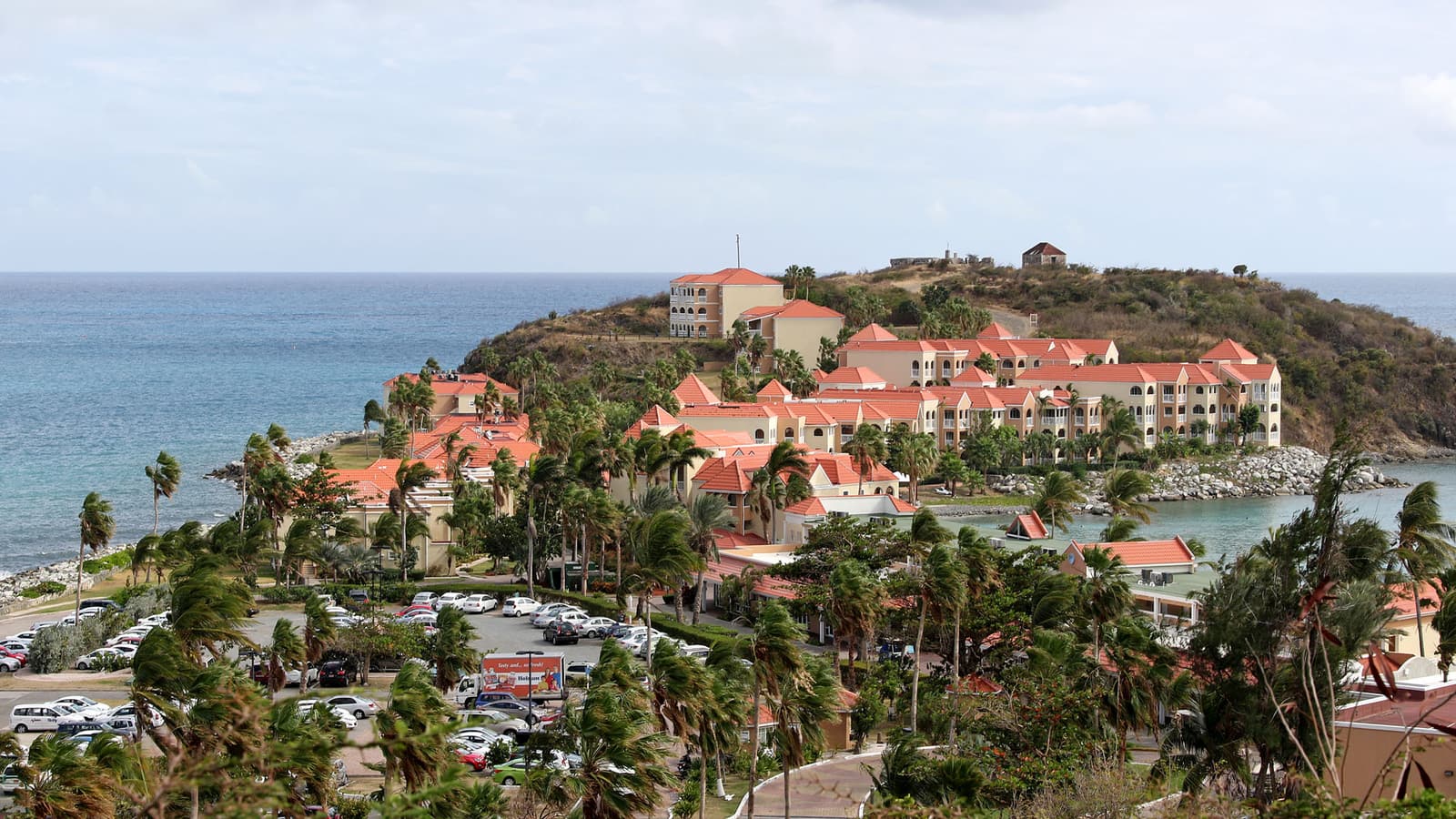
Coves under sandstone cliffs at the island’s western tip — the best sunset on the Dutch side, when there is sand to stand on. See Cupecoy.
Dawn Beach and Guana Bay
On the east coast near Oyster Pond, Dawn Beach faces the sunrise and St Barths. A reef close to shore gives decent snorkelling on calm days; on rough days the waves are for watching. Guana Bay, further north, is a wild, empty Atlantic beach popular with surfers and walkers — currents make it unsuitable for swimming.
The French side
Orient Bay
The big one: two kilometres of sand, a dozen beach clubs, every water sport, and a naturist section at the southern end. See Orient Bay.
Le Galion
Just south of Orient Bay, a reef encloses a lagoon so shallow and calm that it has been the island’s family beach for generations, and the place where local children learn to windsurf. Facilities are simple.
Pinel Island
A five-minute ferry ride to knee-deep, glass-clear water and lunch in the sand. See Pinel Island.
Grand Case, Friar’s Bay and Happy Bay
Three neighbouring bays on the sheltered north-west coast. Grand Case beach runs behind the restaurants; Friar’s Bay (Anse des Pères) is a relaxed family cove with two beach restaurants; and from Friar’s Bay a ten-minute path over the headland leads to Happy Bay, a palm-backed crescent with no road, no bar and very few people.
Baie Rouge
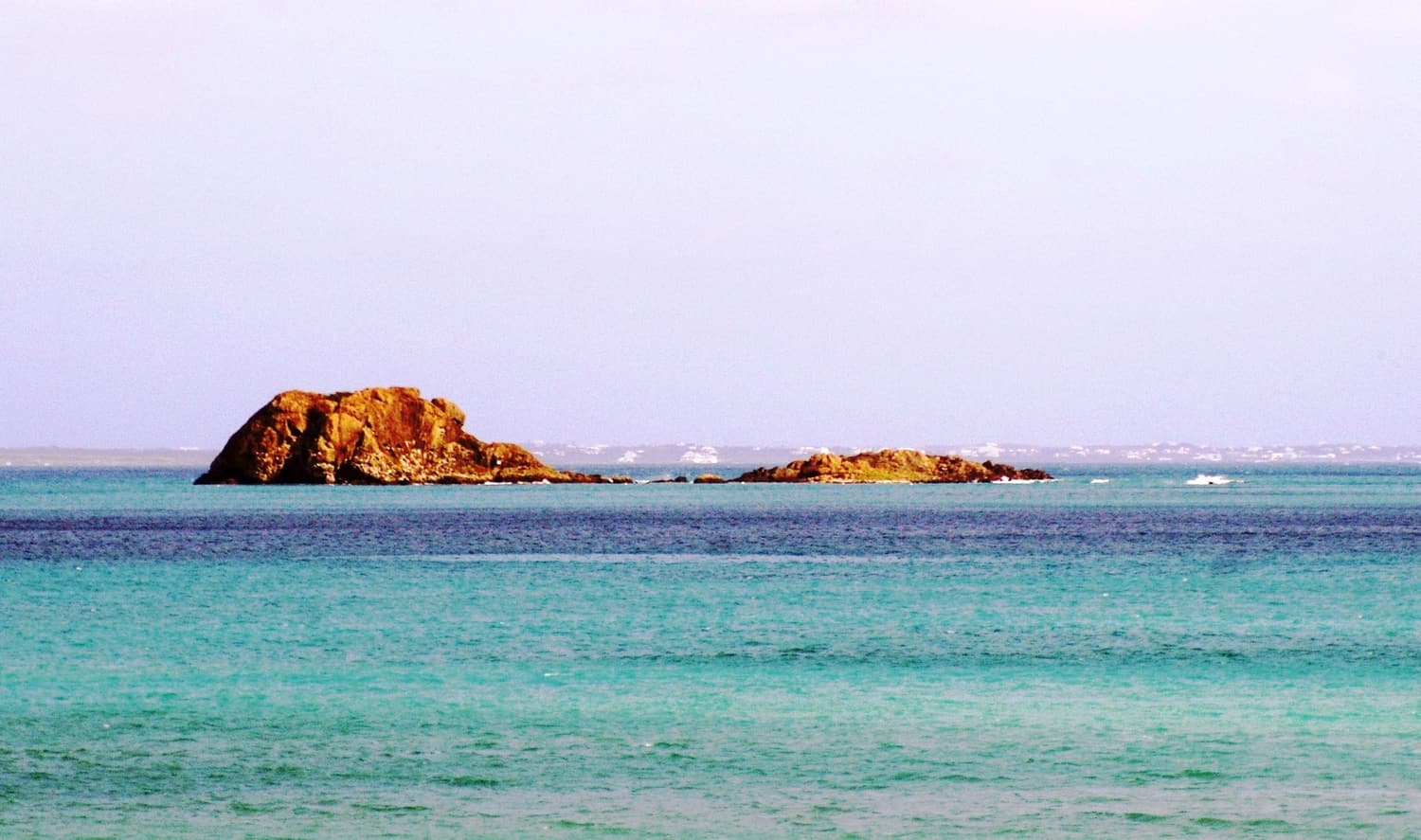
Named for the faintly pink-red tint of its sand, Baie Rouge is one of the most photogenic beaches on the island, with a natural rock arch and small caves at its eastern end that can be reached by swimming or wading when the sea is calm. The beach shelves quickly; snorkelling is good around the rocks.
Baie Longue and Baie aux Prunes
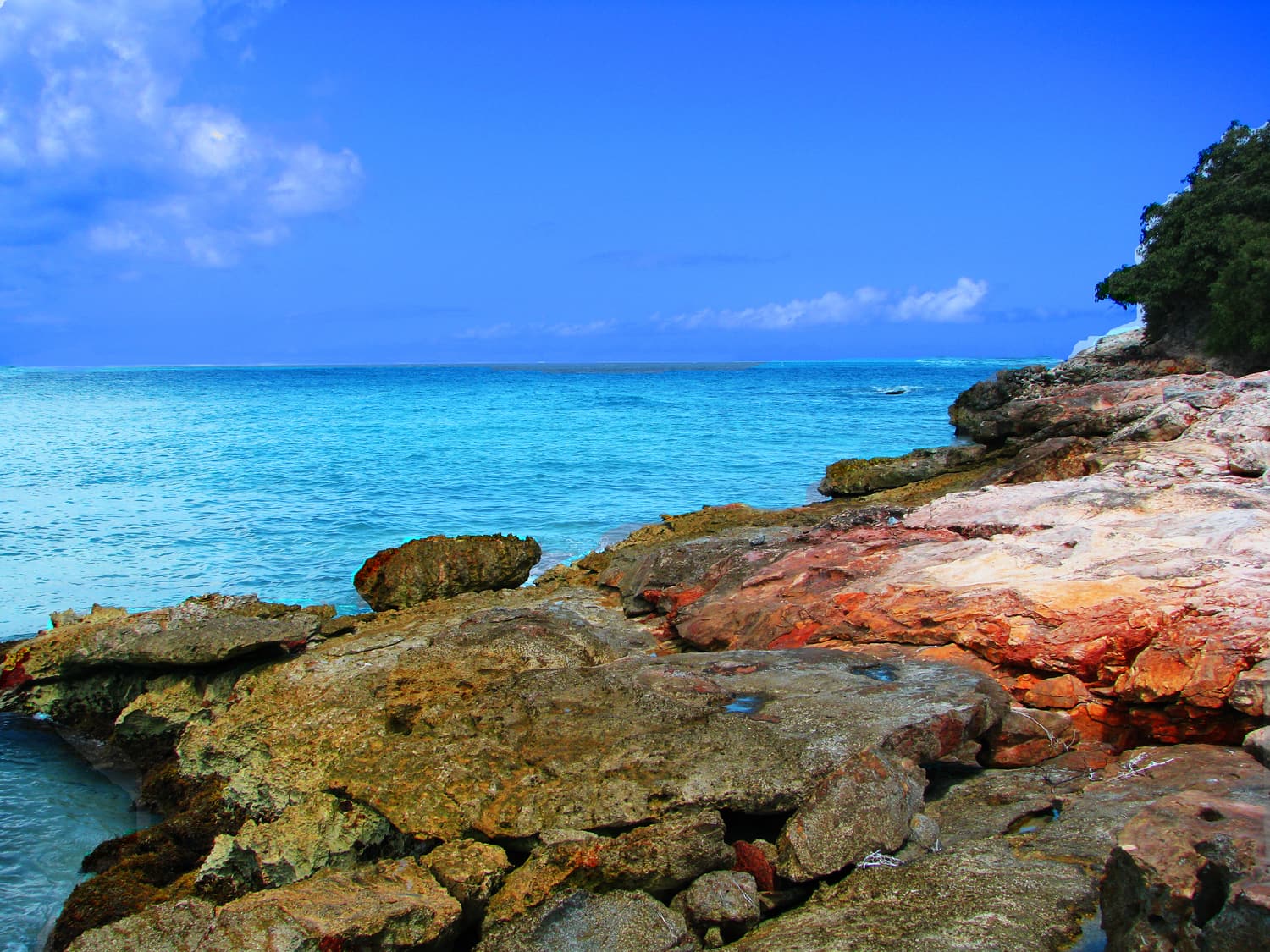
On the Terres Basses peninsula, among the island’s most expensive villas, are its emptiest beaches. Baie Longue (Long Bay) is the longest on the island: a huge, unshaded sweep of sand with a luxury hotel at one end and nothing else. Baie aux Prunes (Plum Bay), round the point, is where surfers go when a swell is running. No facilities at either — bring everything.
Anse Marcel
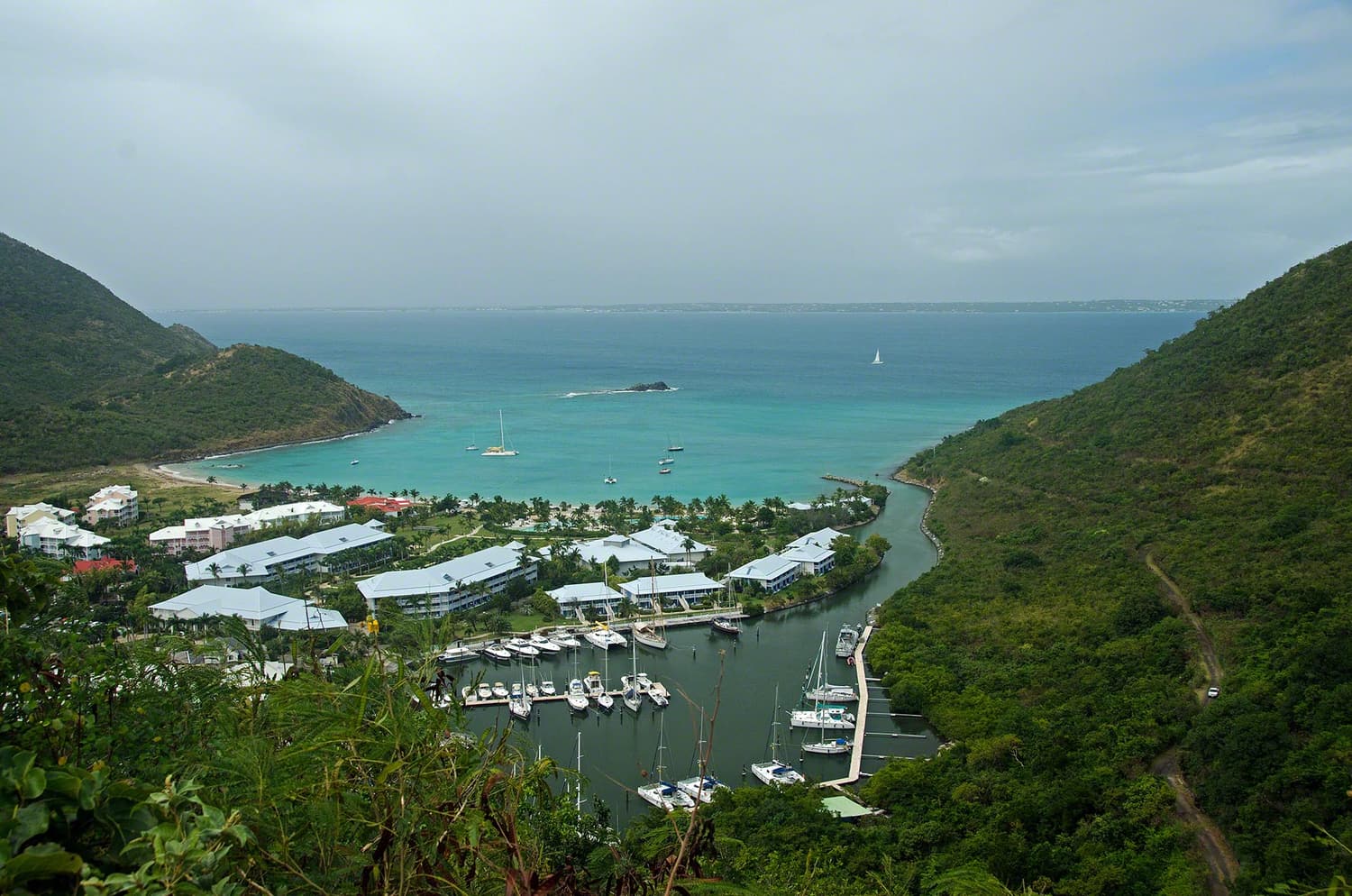
A deep, sheltered cove at the northern tip, reached by a steep road over the hill. The water is calm and shallow, the beach is partly occupied by a resort’s beach club, and the adjacent marina is the departure point for several catamaran trips.
Which beach for what?
- Simply the most beautiful: Mullet Bay, Baie Longue, Pinel — and Shoal Bay East on Anguilla, if you have a day.
- Small children: Pinel, Le Galion, Anse Marcel, Friar’s Bay, Little Bay.
- Snorkelling from the shore: Pinel’s marked trail, Baie Rouge, Little Bay, Dawn Beach on a calm day. For the best snorkelling, take a boat to Creole Rock or Tintamarre.
- Lunch on the sand: Orient Bay, Grand Case, Pinel, Friar’s Bay.
- Sunset: Cupecoy, Kim Sha, Grand Case, Baie Rouge.
- Solitude: Happy Bay, Baie Longue, the middle of Simpson Bay.
- From a cruise ship: Great Bay on foot; Mullet Bay, Maho or Orient Bay by taxi or beach tour.
- Naturists: the southern end of Orient Bay.
Staying safe and being a good guest
- Lifeguards are rare. Watch the water before you go in, particularly in winter and on the east coast. A steep beach face means a dumping shore-break.
- Leave nothing in the car and nothing valuable on your towel.
- Shade is scarce on the wilder beaches. Bring an umbrella or arrive early for a tree.
- Avoid the manchineel tree, which grows behind some Caribbean beaches: its small green apples and its sap are toxic. Do not shelter under one in the rain.
- Sea urchins live among rocks; water shoes help.
- Much of the French-side coast is a nature reserve. Do not feed fish, take shells or coral, or approach turtles and nesting birds. Use reef-safe sunscreen.
- Take your rubbish away — many beaches have no bins.