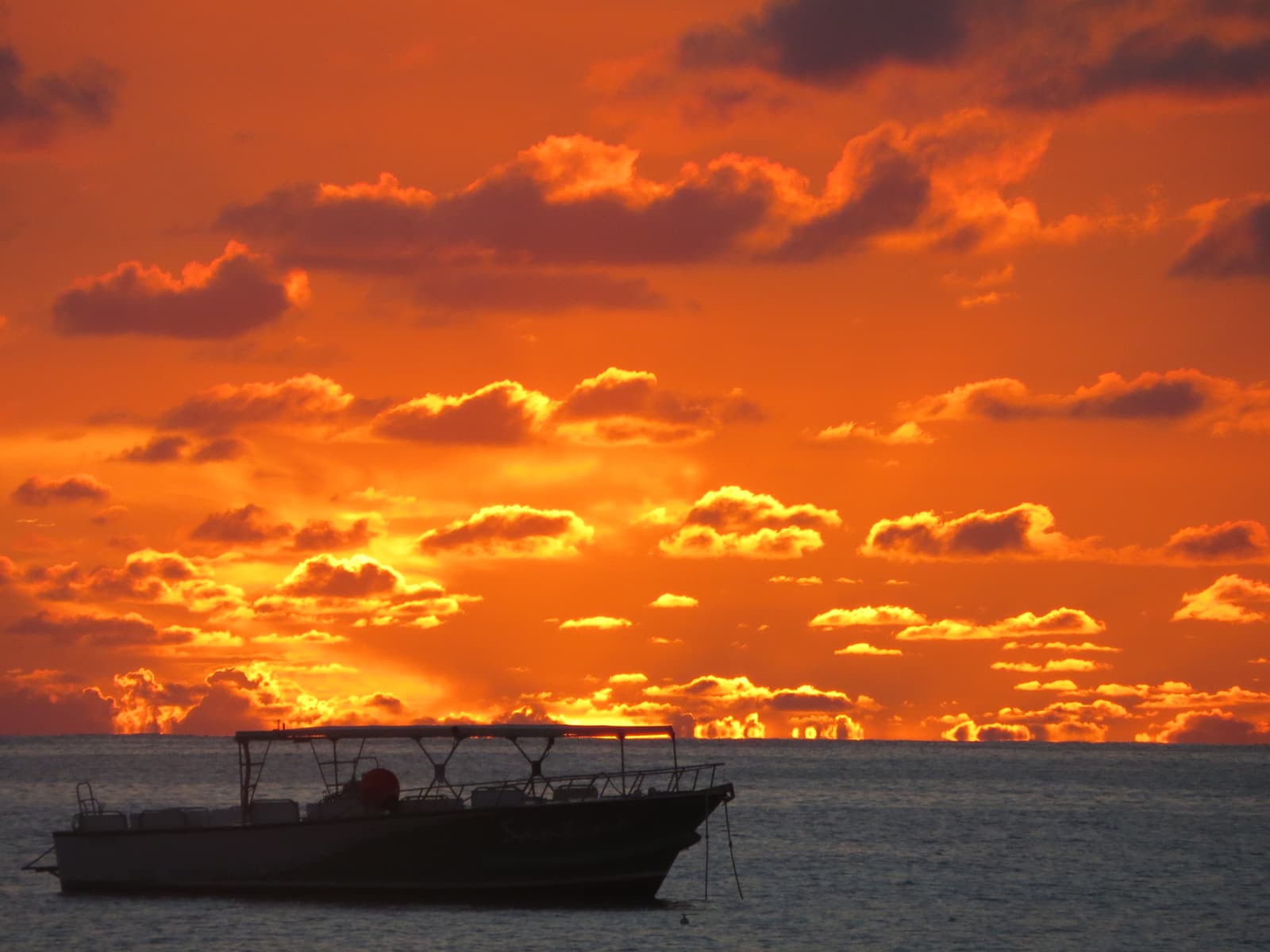
Sint Maarten has a tropical climate tempered by the trade winds. Daytime temperatures sit between about 28 °C and 32 °C (82–90 °F) all year, nights rarely fall below 23 °C, and the sea is warm enough to swim in every month. There is no cold season — only a drier, breezier half of the year and a wetter, stiller, more humid one.
The short answer: for the best weather, come between mid-December and April. For the best balance of weather, price and space, come in late April, May or June, or from mid-November to mid-December. Think carefully about September and October.
The year at a glance
| When | Weather | Crowds & prices | Good to know |
|---|---|---|---|
| Mid-December – mid-April | Driest and breeziest; 28–29 °C by day; little rain, mostly brief showers | High season. Highest rates, most cruise ships, restaurants full | Reserve flights, cars, restaurants and boat trips ahead. Northerly swells can make west-coast beaches rough |
| Mid-April – June | Warming up; still mostly dry; calmer seas | Shoulder season. Prices drop noticeably after Easter | Arguably the best time: Carnival on the Dutch side, quiet beaches, everything open |
| July – August | Hot and more humid, 31–32 °C; more showers; hurricane season under way | Busy with European and regional holidaymakers, but rates stay moderate | Sea at its calmest and warmest; watch forecasts |
| September – October | Hottest, wettest and stillest; peak of hurricane season | Lowest prices; very few ships | Many French-side restaurants and some hotels close for holidays and maintenance |
| November – mid-December | Rain easing, trade winds returning | Quiet until the Christmas rush; good deals | Businesses reopen; a fine time if you accept a few showers |
Hurricane season
The Atlantic hurricane season runs officially from 1 June to 30 November. The island lies in the path of storms that form off Africa and track west, and the period of greatest risk is from about mid-August to mid-October. In most years no hurricane comes close; in some, the island receives a tropical storm with a day or two of wind and heavy rain; rarely, it takes a direct hit.
That rare event happened on 6 September 2017, when Hurricane Irma crossed the island as a Category 5 storm, one of the most powerful ever recorded in the Atlantic, damaging or destroying the great majority of buildings. Hurricane Luis in 1995 was similarly destructive. The island has rebuilt to tougher standards each time, and forecasting now gives several days’ warning.
- If you travel between August and October, book flights and accommodation that can be changed or refunded, and take travel insurance that explicitly covers named storms.
- Follow the forecasts of the US National Hurricane Center in the week before you travel.
- If a storm threatens while you are on the island, airlines add departures beforehand; hotels have procedures. Follow official instructions.
- Cruise lines reroute ships around storms, so a hurricane more often means a changed itinerary than a danger.
Rain
Even in the wet months, rain usually comes as short, heavy showers followed by sun, often in the late afternoon or overnight. All-day rain is unusual outside tropical systems. February and March are typically the driest months; September to November the wettest. The island is fairly dry by Caribbean standards — the hills are green after the rains and brown by April.
Wind and sea
- The trade winds blow from the east most of the year and are strongest from December to March — the “Christmas winds”. They keep the heat comfortable and make Orient Bay and Le Galion the places for kitesurfing and windsurfing.
- The east (Atlantic) coast is always choppier than the west. Ferries to St Barths and Saba are roughest in the windy months.
- Winter ground swells from the north occasionally bring big waves to Mullet Bay, Cupecoy, Baie Rouge and Baie Longue, and can strip sand from Maho and Cupecoy for weeks.
- Summer generally brings the flattest seas and the best visibility for snorkelling and diving.
- Sea temperature ranges from about 26 °C in February to 29 °C in September.
Sargassum
In recent years, floating sargassum seaweed has washed onto Caribbean coasts in varying quantities, mostly between spring and autumn. On Sint Maarten it affects the east-facing beaches — Orient Bay, Le Galion, Dawn Beach, Cul-de-Sac — far more than the west. It comes and goes with wind and current; a beach can be covered one week and clear the next. If the east coast is affected during your stay, the west-coast beaches from Simpson Bay to Baie Rouge are usually clean.
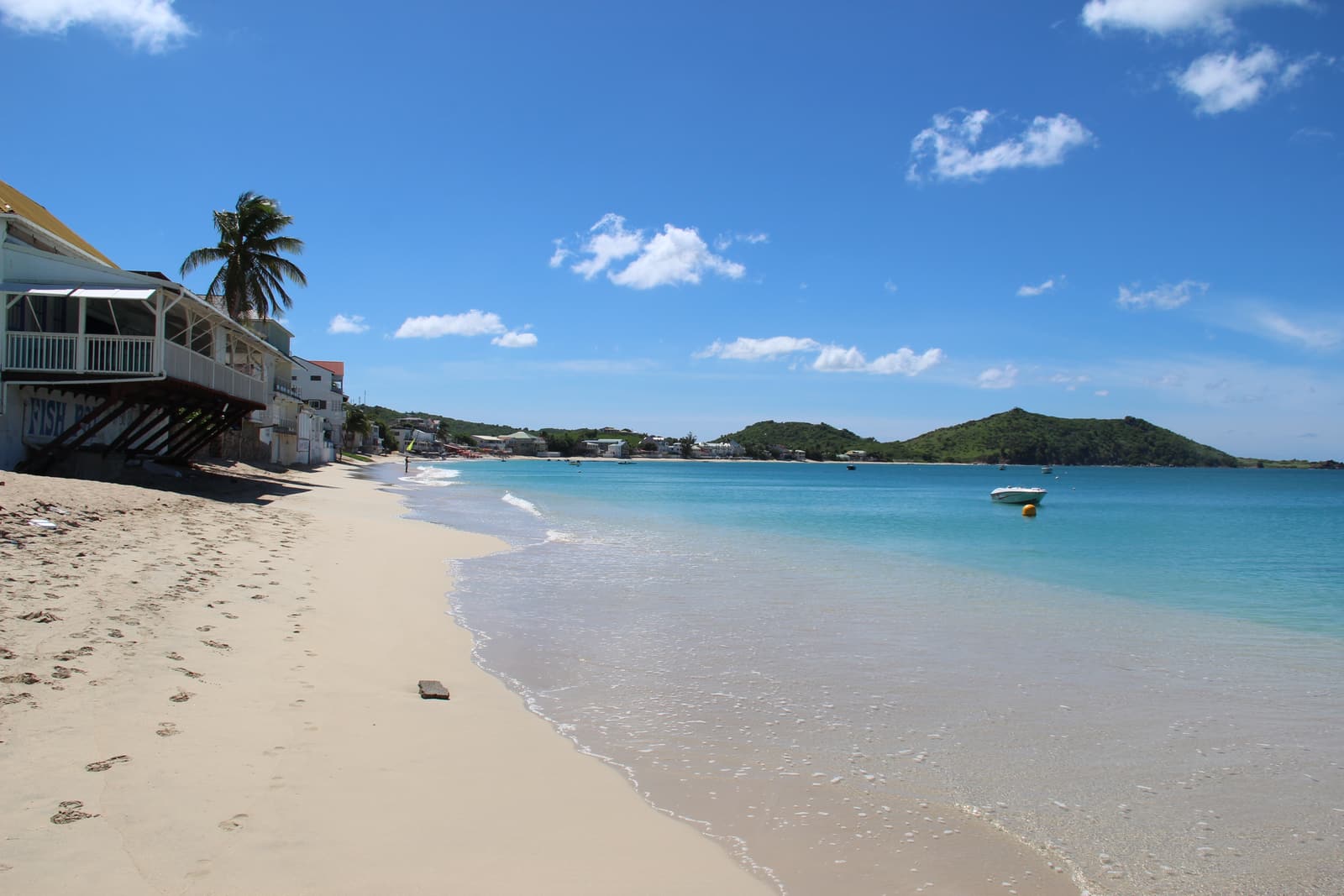
Events worth planning around
- French-side Carnival — parades in Marigot and Grand Case in the weeks before Lent, ending on Ash Wednesday (February or March).
- St. Maarten Heineken Regatta — four days of yacht racing and nightly concerts in early March; the island’s biggest sporting event.
- Mardis de Grand Case — Tuesday-evening street festivals in Grand Case during the winter season, when held.
- Dutch-side Carnival — the island’s largest festival, running for about two weeks from mid- or late April into early May, with parades in Philipsburg, calypso and soca shows and a “Carnival Village” of food stalls. The main parades fall around King’s Day, 27 April.
- Bastille Day (14 July) and Schoelcher Day (21 July) — French-side celebrations with fireworks, traditional boat races and music; the latter, in Grand Case, marks the abolition of slavery.
- St Martin’s Day (11 November) — the one holiday celebrated jointly by both sides, with ceremonies at the border monument.
- Christmas and New Year — the most expensive fortnight of the year, with superyachts filling the lagoon and fireworks over Great Bay.
Dates move from year to year; check before you book around a specific event.
When to come for…
- Guaranteed sunshine: February to April.
- Lower prices with good weather: May, June and late November.
- Snorkelling and calm boat trips: May to August.
- Kitesurfing and sailing: December to March.
- Fine dining in Grand Case: any time except September and early October, when many kitchens close.
- Plane-spotting at Maho: winter has the most flights; the beach has the most sand in summer.
- Avoiding cruise crowds: May to October — or any Sunday.
Daylight
This close to the equator the length of the day hardly varies: the sun rises between about 05:35 and 06:45 and sets between about 17:35 and 18:50. Darkness falls quickly — sunset sails and Cupecoy sundowners need to be timed, not improvised.