Almost everyone arrives on the Dutch side, either at Princess Juliana International Airport or at the cruise piers in Philipsburg, and then moves freely over the whole island. This page explains how to get here, what happens on arrival and how to get around once you are in.
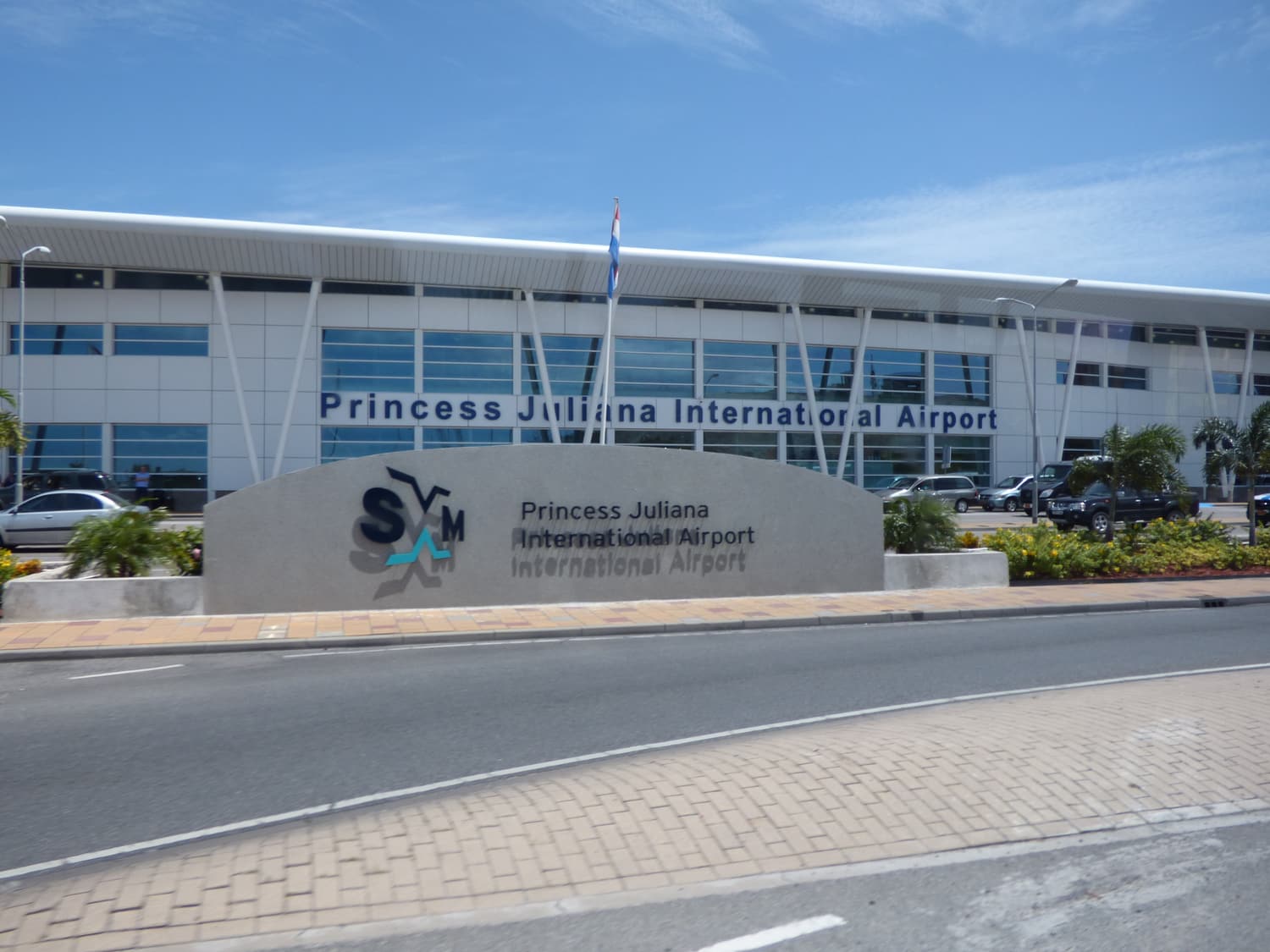
By air: Princess Juliana International Airport (SXM)
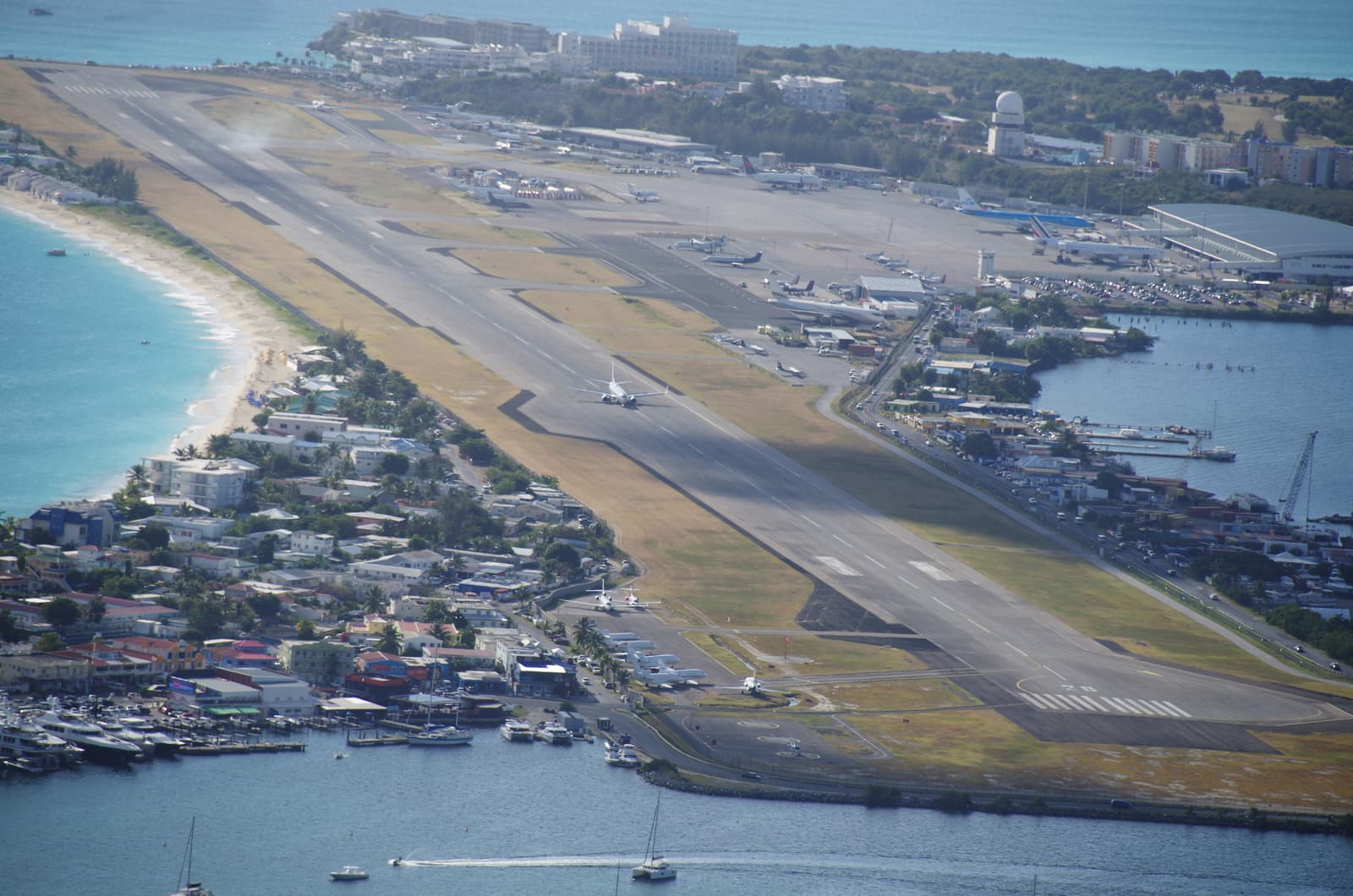
The island’s main airport lies on a strip of land between Simpson Bay and the lagoon on the Dutch side, with its runway famously ending at Maho Beach. It is the busiest hub in the north-eastern Caribbean, with:
- North America: non-stop flights from several US East Coast and southern cities and from Canada, with more frequencies in winter.
- Europe: direct services from Paris and Amsterdam.
- The Caribbean: regional flights to and from neighbouring islands, and the small-plane shuttles to Saba, St Eustatius, St Barths and beyond operated by the local carrier, Winair.
Airlines and routes change every season, so check current schedules rather than relying on a list. The terminal was wrecked by Hurricane Irma in September 2017; after years of temporary arrangements the rebuilt building was completed in 2024, and arrivals and departures are once again air-conditioned and reasonably quick.
On arrival
You clear immigration and customs for the country of Sint Maarten, even if you are staying on the French side — there is no further control when you drive across. The Dutch-side authorities have used an online embarkation–disembarkation card that you complete before travel; check the current requirement before you fly. Entry rules and visa requirements depend on your nationality, and they are not identical for the Dutch and French sides, neither of which is part of the Schengen area. Confirm with official sources.
By air: Grand Case-Espérance Airport (SFG)
The French side has its own small airport behind Grand Case, used by regional turboprops to and from Guadeloupe, Martinique and St Barths. If you are connecting through the French Antilles it can be the more convenient gateway.
Airport transfers
Approximate driving times from SXM in normal traffic. In the late afternoon, and when the Simpson Bay bridge opens, allow more.
| From SXM airport to | Driving time | Notes |
|---|---|---|
| Maho & Mullet Bay | 5 minutes | Around the end of the runway |
| Simpson Bay | 5–10 minutes | Bridge openings stop traffic |
| Cupecoy | 10 minutes | Last stop before the border |
| Marigot | 15–20 minutes | Via the causeway or Terres Basses |
| Philipsburg & cruise port | 20–40 minutes | Over the Cole Bay hill; slow at rush hour |
| Grand Case | 25–35 minutes | Through Marigot |
| Orient Bay & Cul-de-Sac | 35–45 minutes | Across the French side |
| Oyster Pond & Dawn Beach | 35–50 minutes | Via Philipsburg |
Taxis
Licensed taxis wait outside arrivals, organised by a dispatcher. There are no meters: fares are fixed by destination, for one or two passengers, with a supplement per extra person and, typically, surcharges late at night and for extra luggage. The tariff is posted at the stand. Fares are paid in US dollars in cash; on the French side drivers quote in euros or dollars. Always confirm the total before you get in.
Car rental
A car is the best way to see the island if you are staying more than a couple of days. International and local agencies have desks at or near the airport, at the cruise port and in the main resort areas.
- Driving is on the right on both sides. Your home licence is normally sufficient for a short visit.
- Roads are narrow, hilly and sometimes potholed; speed bumps are frequent and often unmarked. Scooters overtake on both sides.
- Traffic is heavy around Simpson Bay, Cole Bay, Philipsburg and Marigot from about 07:30–09:00 and 16:00–18:30. A fifteen-minute drive can take forty-five.
- Fuel is sold in guilders or dollars on the Dutch side and in euros on the French side; prices differ, so it can pay to compare.
- Never leave anything in a parked car, especially at beaches and viewpoints. This is the island’s most common crime against visitors.
- In high season, reserve the car when you book your flights.
Minibuses
The island’s public transport is a fleet of privately owned minibuses, identifiable by a “BUS” licence plate on the Dutch side and by a destination card in the windscreen. They run frequently in the daytime on the main routes — Philipsburg–Simpson Bay–Maho–Mullet Bay, Philipsburg–Marigot and Marigot–Grand Case — and less often in the evening. You flag them down anywhere, tell the driver where to stop and pay a dollar or two (or the euro equivalent) in cash as you get off. They do not serve Orient Bay, Pinel or most beaches directly.
The border
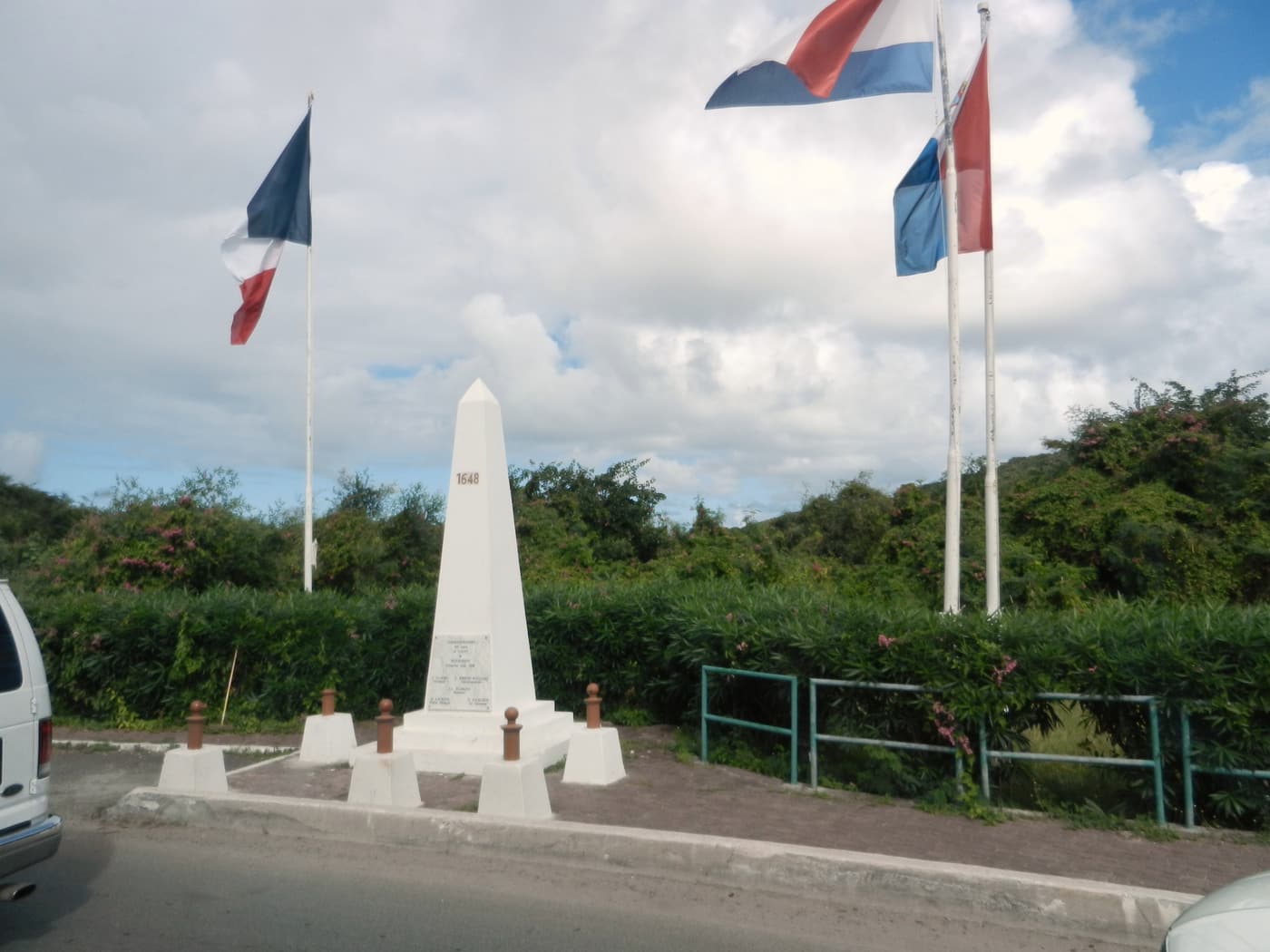
There isn’t one in any practical sense. The line between Sint Maarten and Saint-Martin, agreed in 1648, is marked by a monument on the Philipsburg–Marigot road at Bellevue and by signs elsewhere; nobody stops you and no documents are needed. Rental cars and taxis cross freely. What does change is the currency on price tags, the electrical sockets, the phone network — and the bread.
Ferries to the neighbouring islands
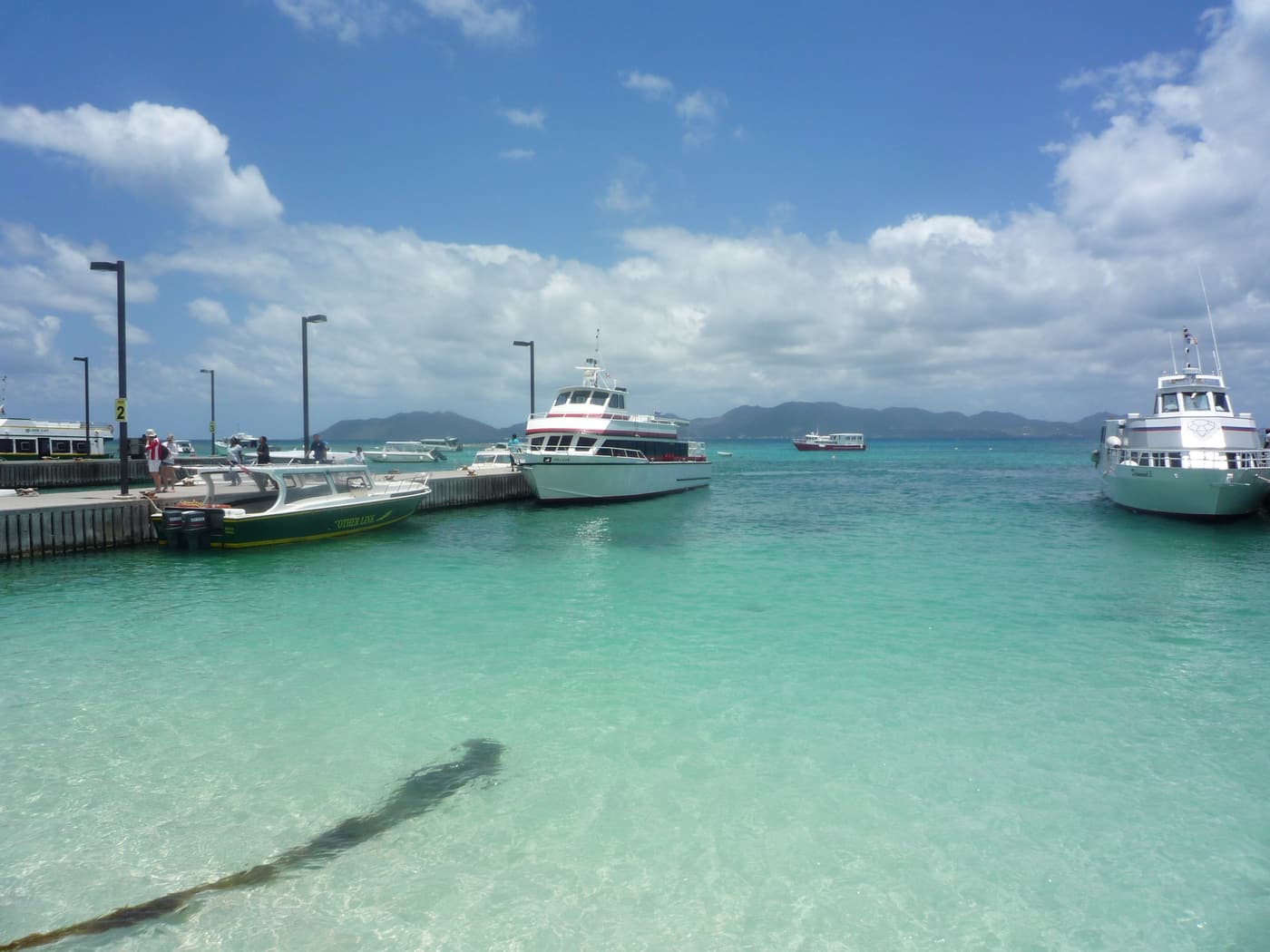
- Anguilla: public ferries from the terminal in Marigot to Blowing Point, about 25 minutes, roughly every 45 minutes in the daytime; and private shuttle boats from a dock near SXM airport that connect with flights.
- St Barths: fast ferries from Philipsburg (about 45 minutes) and from Marigot (about an hour) to Gustavia, several times a day in season.
- Saba: ferries on certain days of the week from Philipsburg and Simpson Bay, about an hour and a half; or a 12–15 minute flight.
For all three you need your passport, you pay departure taxes, and you should check the timetable a day ahead — sailings are cancelled in heavy weather. Each destination page has the details.
Arriving by cruise ship
Ships dock at Pointe Blanche, a short walk or water-taxi ride from Philipsburg. Everything a cruise passenger needs — the port, taxis, timings and shore plans — is in our cruise-day guide.
Arriving by yacht
The island is one of the Caribbean’s main yachting centres. Simpson Bay Lagoon, entered through drawbridges on both the Dutch and French sides, holds most of the marinas; Marigot Bay, Anse Marcel and Oyster Pond have others. The Dutch and French sides have separate clearance procedures, so clear in on the side where you intend to berth.