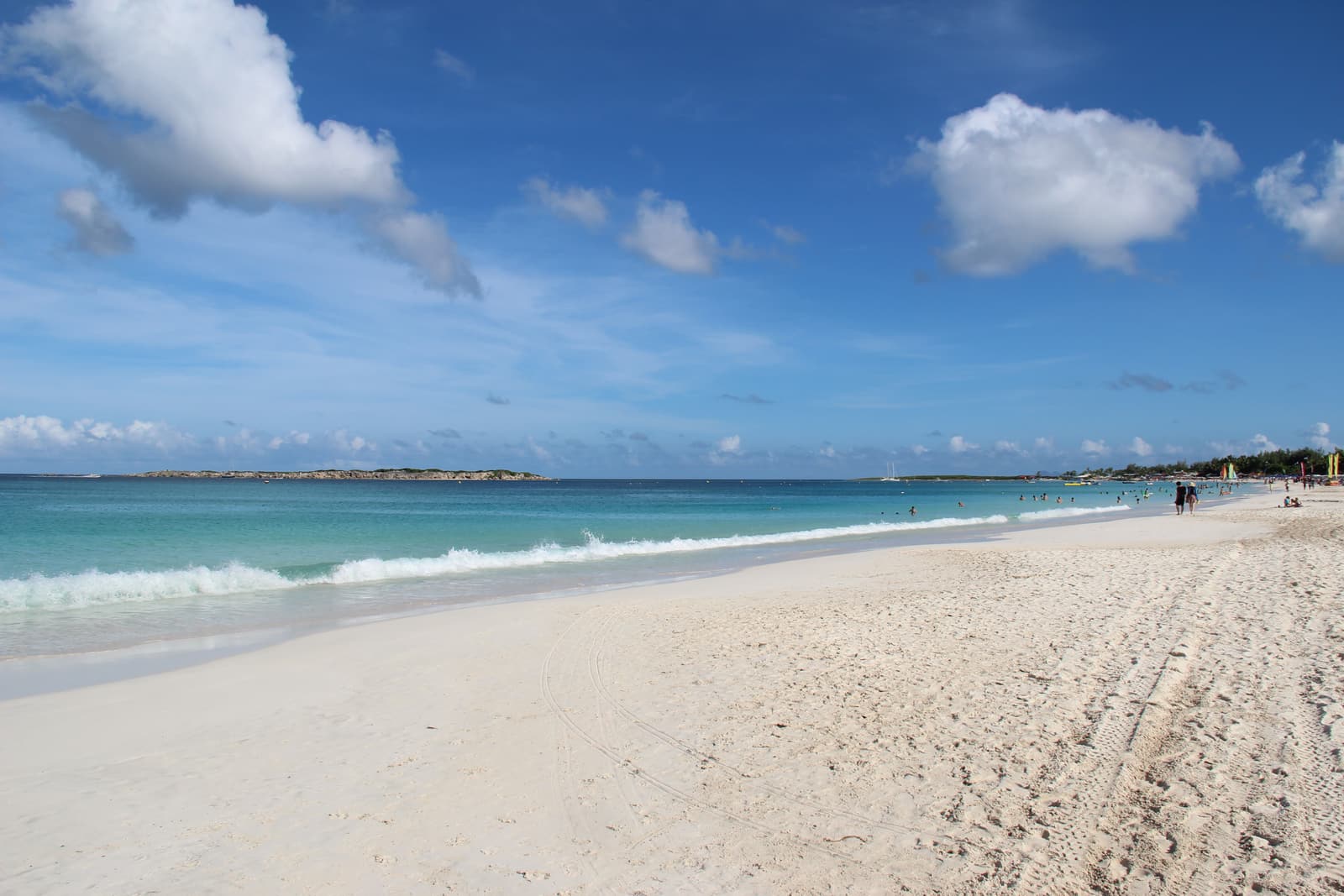
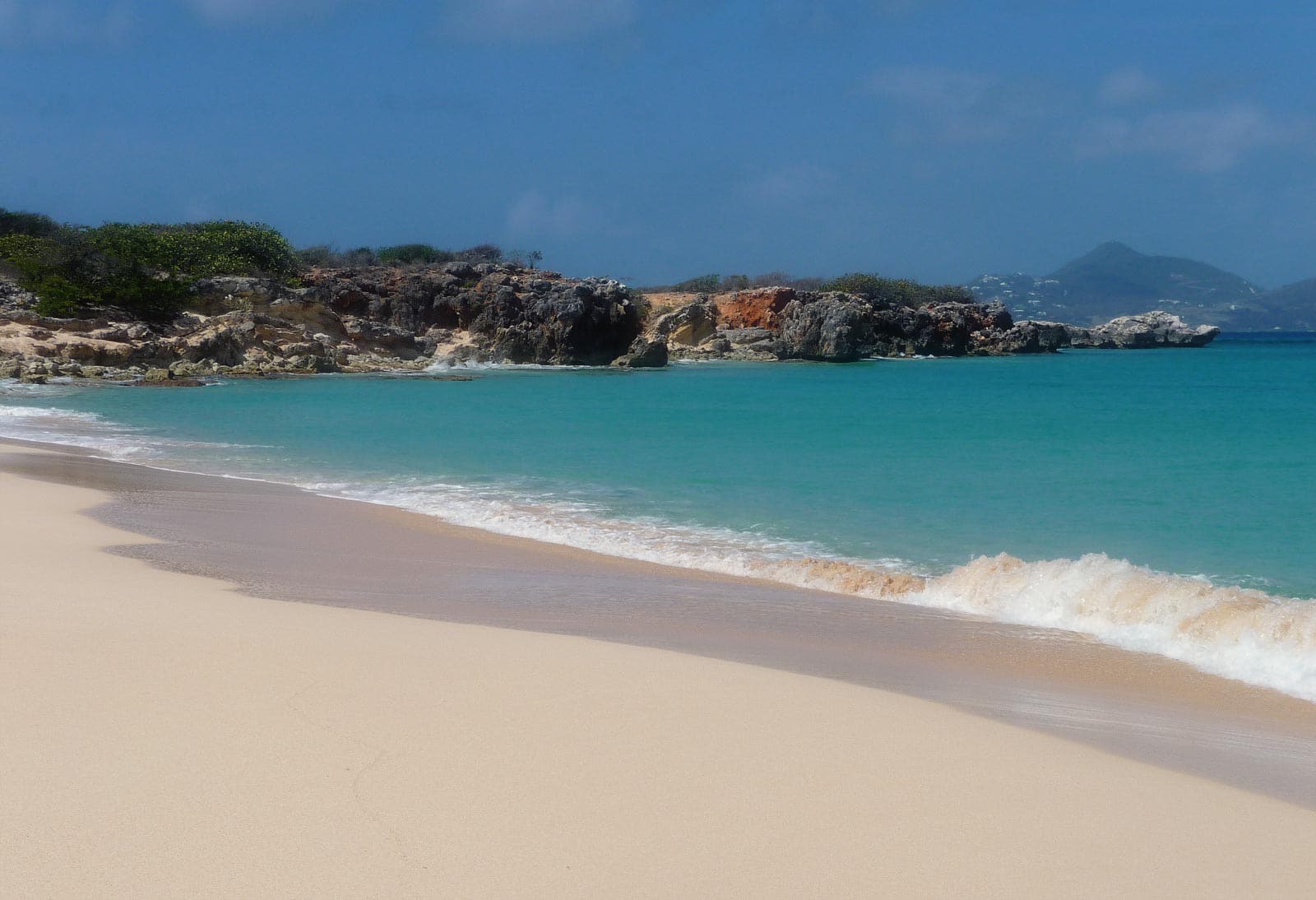
Tintamarre — also called Flat Island — lies about three kilometres off the north-east coast, a low limestone plateau less than two kilometres long with nobody living on it. Seen from Orient Bay it is a thin line on the horizon. Up close it has a west-facing beach of white sand, Baie Blanche, with water of an almost unreal clarity and a resident population of green sea turtles.
The island has an odd history. In the early 20th century it was a private estate producing cotton and cattle; in the 1940s it briefly served as the base of a small airline, whose grass airstrip can still be traced in the scrub. Today it belongs to the coastal conservancy and lies within the Réserve Naturelle de Saint-Martin. There are no buildings, no shade to speak of, no water and no jetty: boats anchor off the beach or pick up a mooring, and you swim or wade ashore.
Top things to do: Tintamarre
Swim with turtles
Sea grass grows in the sandy bay off Baie Blanche and green turtles come to graze on it, surfacing to breathe every few minutes. Snorkelling quietly above them is the highlight of most visits. Keep several metres away, never touch or chase them and never stand on the sea grass.
Walk the beach
Baie Blanche is a few hundred metres of bright sand under low cliffs. Even with several boats at anchor it feels remote. There is no natural shade — bring a hat and a shirt.
Find the old airstrip
A rough path leads up from the beach onto the plateau, where the line of the former runway and a few stone ruins survive among the thorn bushes. It is hot and prickly; wear shoes.
Snorkel the cliffs
At the northern end of the beach the rock drops into deeper water with more fish life — parrotfish, trumpetfish, sometimes a ray or a barracuda. On the exposed sides of the island the sea is usually too rough.
How to get to Tintamarre
- By organised boat trip: the only practical way. Catamarans, sailing boats and speedboats run half-day and full-day trips, typically combining Tintamarre with Creole Rock and Pinel. Most leave from Cul-de-Sac, Orient Bay, Anse Marcel or Grand Case on the French side; some full-day trips start on the Dutch side.
- By private charter: skippered boats can be hired by the half-day or day from Marigot, Grand Case and Anse Marcel.
- Crossing time: 15–30 minutes from the French-side departure points; the channel can be choppy when the trade wind is strong.
Insider tips
- Check exactly which stops a boat trip includes before booking — itineraries change with the weather, and Tintamarre is the first stop dropped when the sea is rough.
- The reserve asks visitors not to use the island’s clay for the “mud baths” that some tours used to promote; it damages the cliffs.
- Take everything back with you. There are no bins and no facilities of any kind.
- Use mineral, reef-safe sunscreen, or better, wear a rash vest: you will be in the water over sea grass and coral.
- If you are prone to seasickness, choose a larger catamaran over a small speedboat for the crossing.
Best tours for Tintamarre
These well-reviewed experiences are the easiest way to see Tintamarre:
 Sailing trip from US$129
 Half-Day Sail around the St Martin Marine Reserve
An afternoon sail through the marine reserve off the French side of the island. A listing with very few reviews so far.
- The protected waters of the French-side nature reserve
- A half day under sail
- An afternoon departure
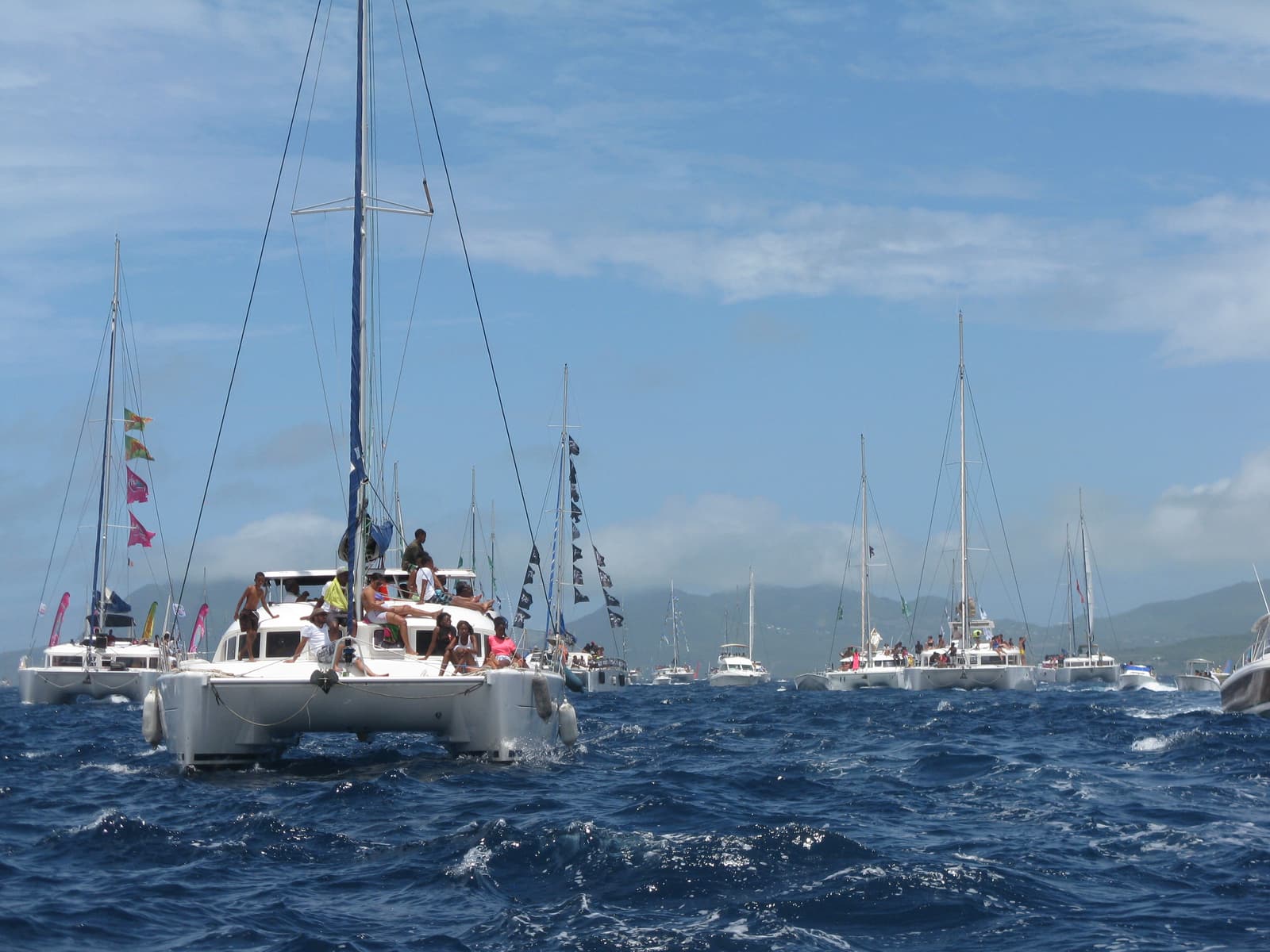 Catamaran day trip from US$125
 Catamaran Snorkel Cruise with Open Bar and Lunch
The sociable version of a day at sea: a catamaran day trip around Saint-Martin with an open bar, stops for snorkelling and swimming and a barbecue lunch.
- Open bar, music and snacks on board
- Snorkel and swim stops
- BBQ lunch included