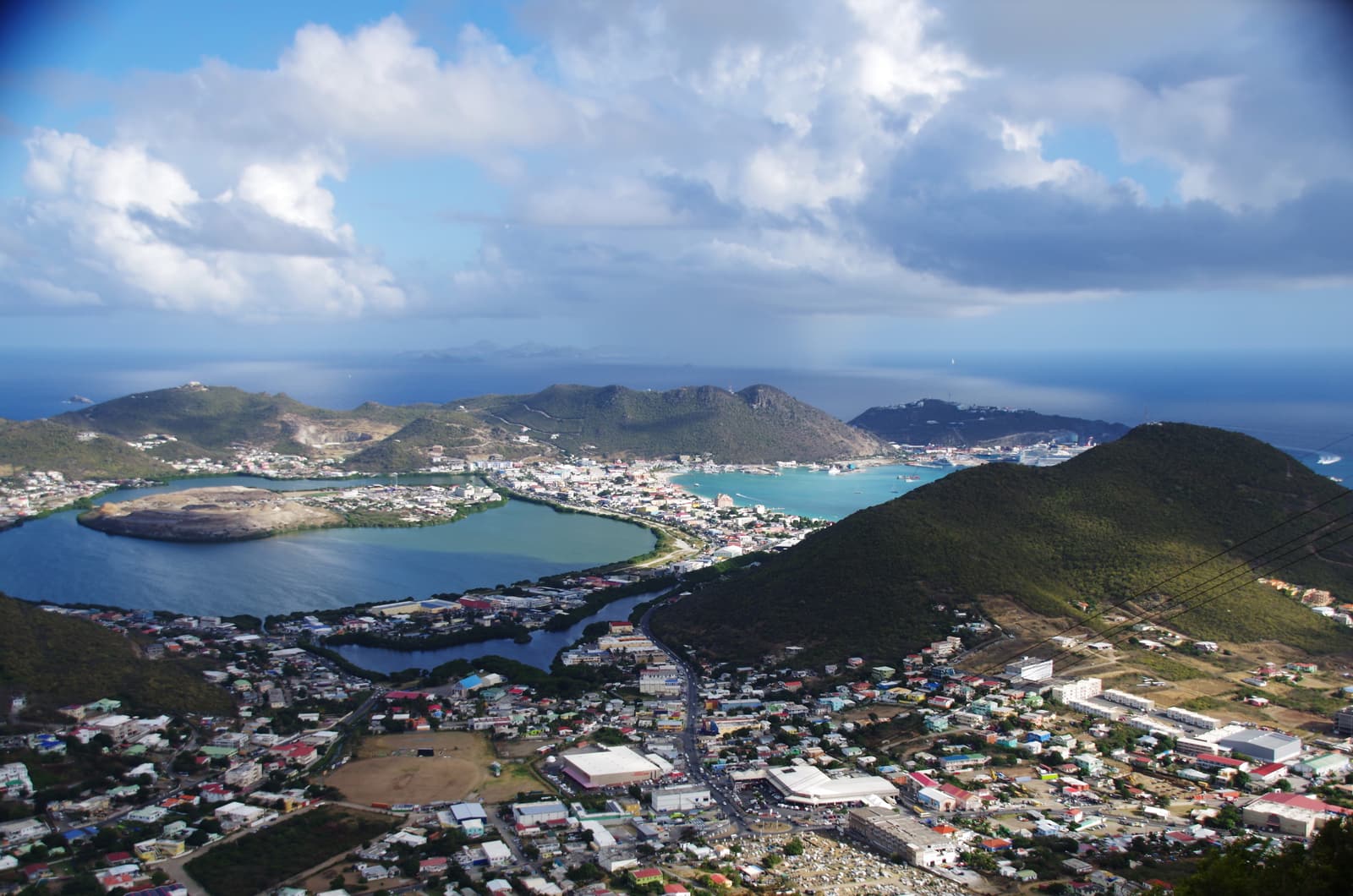
Sint Maarten / Saint-Martin is a hilly island of about 87 square kilometres in the Leeward Islands, roughly 300 kilometres east of Puerto Rico. It is the smallest inhabited island in the world divided between two nations, and it has been so since 1648. Around 40,000 people live on the Dutch side and somewhat fewer on the French; well over a hundred nationalities are represented, and English is the language everybody shares.
Two countries, side by side
The southern 40 per cent of the island is Sint Maarten, since 10 October 2010 a self-governing country within the Kingdom of the Netherlands. The northern 60 per cent is Saint-Martin, a French overseas collectivity and part of the European Union. For a visitor the differences are practical ones:
| Sint Maarten (Dutch side) | Saint-Martin (French side) | |
|---|---|---|
| Capital | Philipsburg | Marigot |
| Status | Country in the Kingdom of the Netherlands; not in the EU | French overseas collectivity; in the EU, outside Schengen |
| Official languages | Dutch and English | French |
| What you will hear | English, plus Spanish, Papiamento, Dutch | French and English, plus Creole and Spanish |
| Currency | Caribbean guilder; US dollars used everywhere | Euro; US dollars widely accepted |
| Electricity | 110 V, 60 Hz — North American flat-pin plugs | 220 V, 60 Hz — European round-pin plugs |
| Phone code | +1 721 | +590 |
| Known for | Airport, cruise port, casinos, duty-free shopping, nightlife | Restaurants, bakeries, beach clubs, nature reserve |
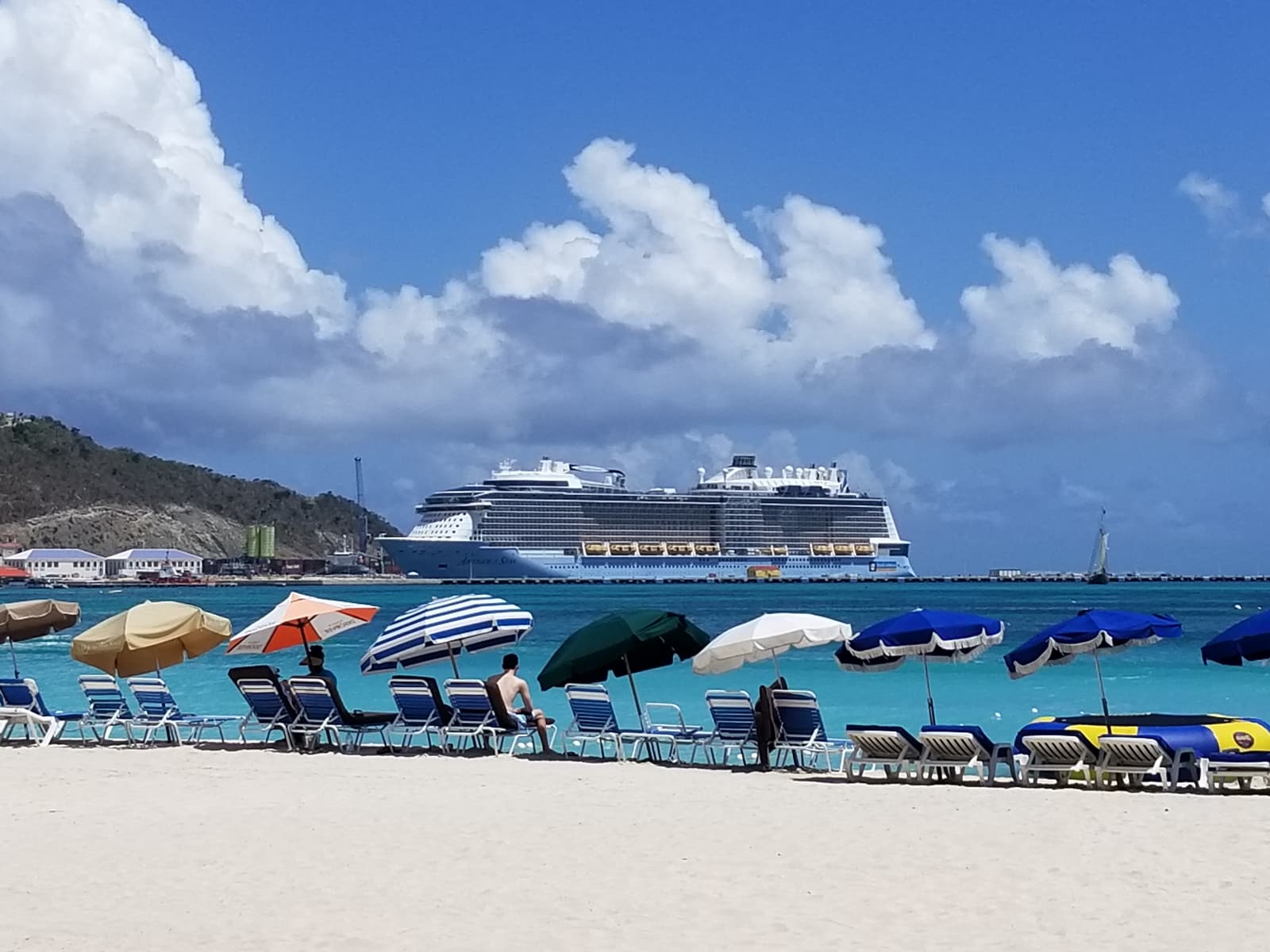 Dutch side — Sint Maarten
 Philipsburg
The Dutch-side capital: Front Street, the Great Bay boardwalk and the cruise port.
A four-street town on a sandbar between Great Bay and the Great Salt Pond, with duty-free shopping on Front Street, a long town beach, an 18th-century courthouse and the island’s cruise piers a short walk or water-taxi ride away.
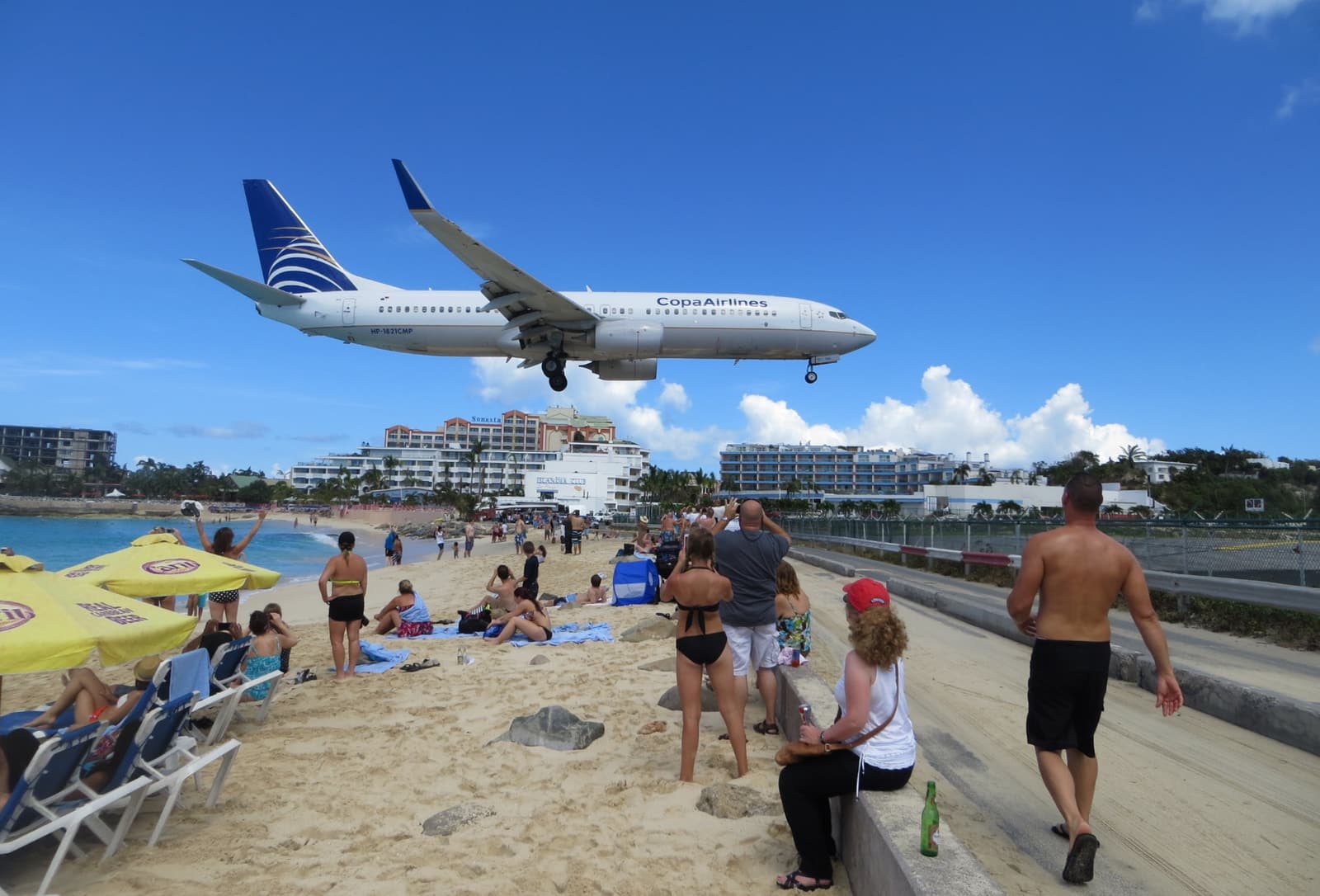 Dutch side — Sint Maarten
 Maho Beach
The beach at the end of the runway, where jets pass a few metres overhead.
A short strip of sand directly under the final approach to Princess Juliana International Airport. People come from all over the world to stand beneath landing airliners, check the arrivals board at the beach bar and swim between flights.
 French side — Saint-Martin
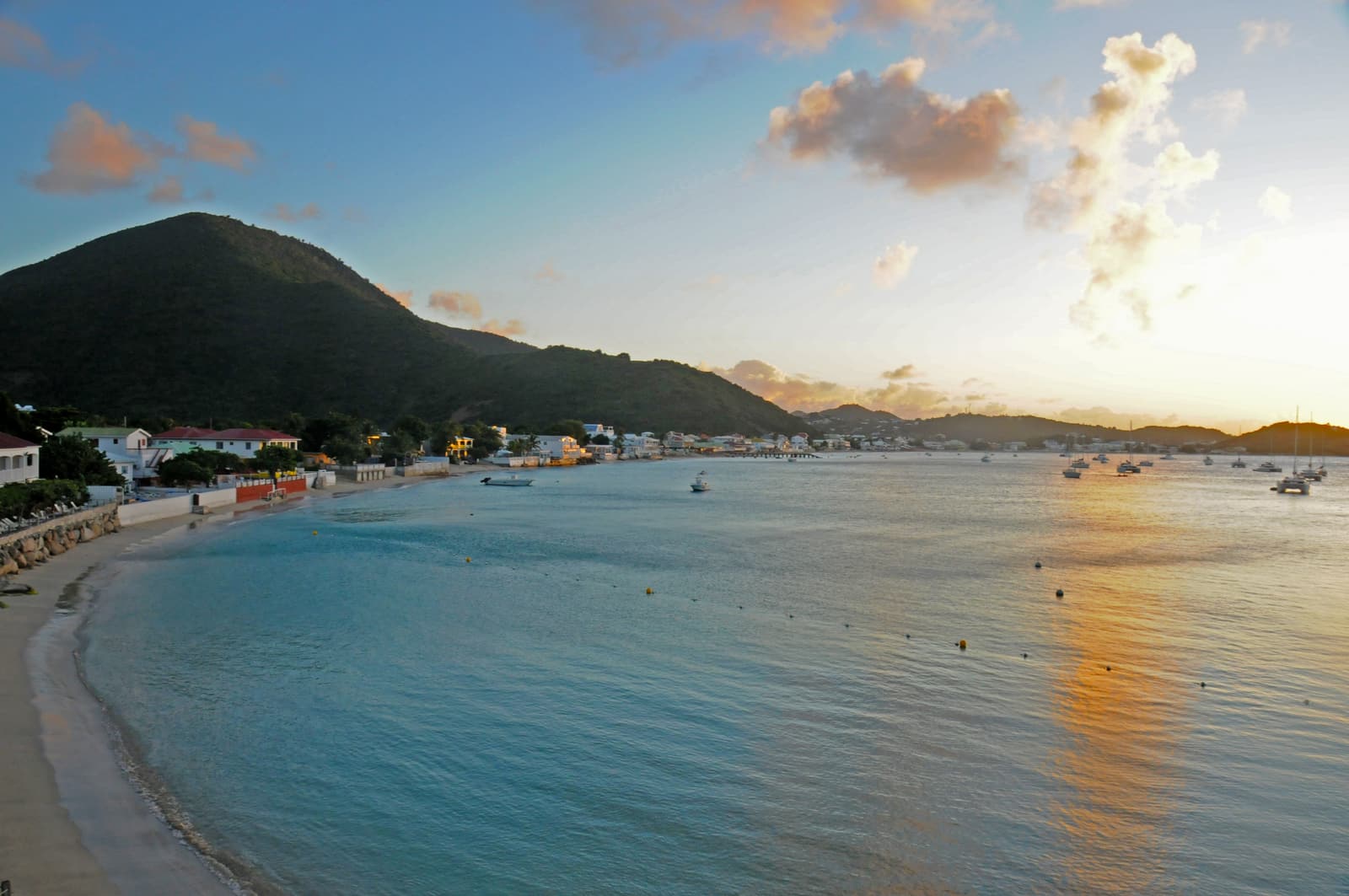
 Grand Case
One beachfront street, dozens of restaurants and the island’s famous lolos.
A fishing village on a calm bay that became the dining capital of the island: French and Creole restaurants shoulder to shoulder along the boulevard, open-air barbecue stands called lolos, and Creole Rock for snorkelling just offshore.
 French side — Saint-Martin
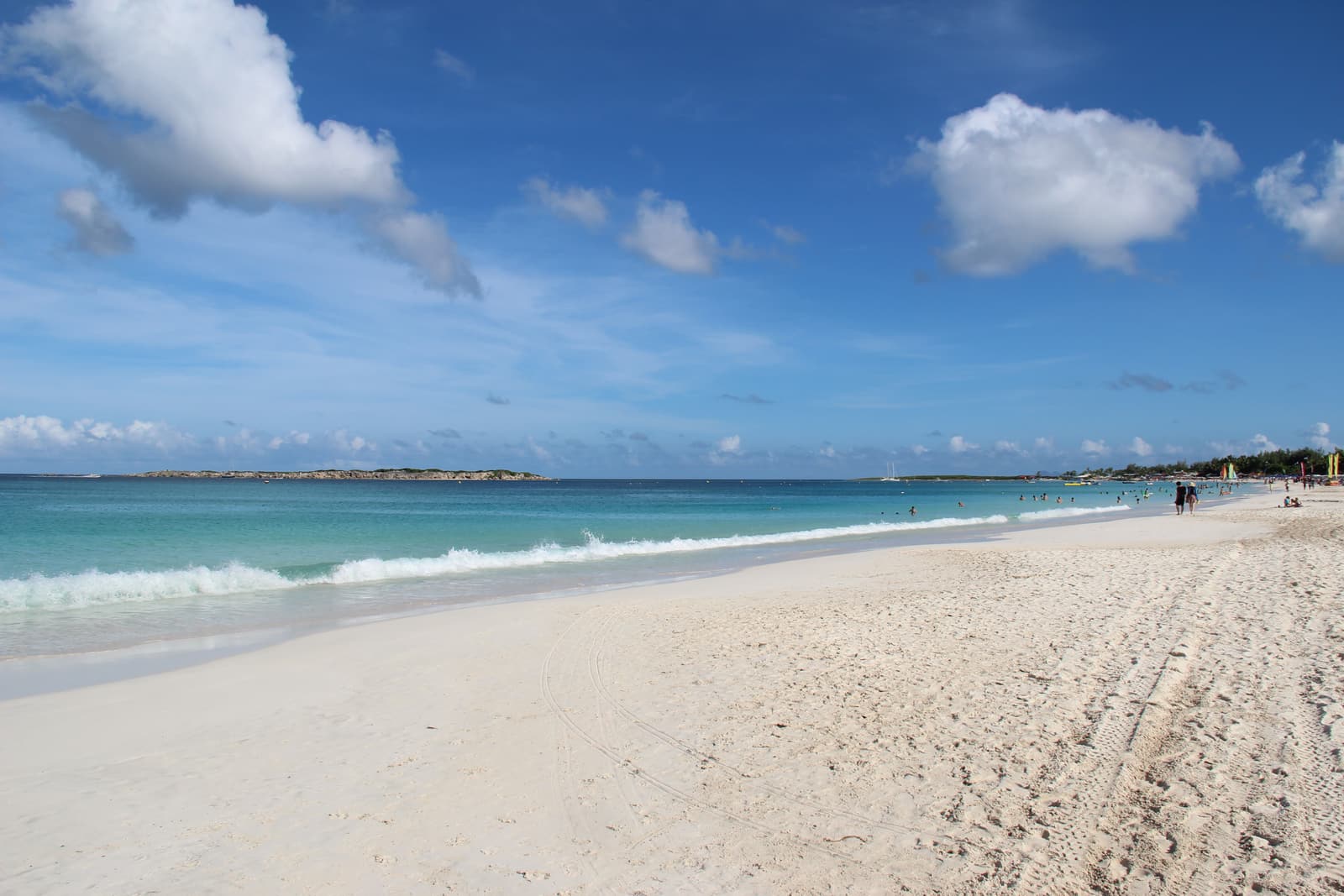
 Orient Bay
The French side’s big, breezy beach of clubs, water sports and long lunches.
Around two kilometres of pale sand on the Atlantic side, lined with beach clubs, restaurants and water-sports operators. Lively in the middle, quieter at the ends, with a long-established naturist section at the southern tip.
Between the two there is no border control of any kind. Read more about crossing, driving and buses in getting here & around.
Money
- US dollars are the island’s working currency. On the Dutch side virtually every price is in dollars. The official currency there is the Caribbean guilder, which replaced the Netherlands Antillean guilder in 2025 and is pegged at about 1.79 to the dollar; you may receive it in change but never need to seek it out.
- On the French side prices are in euros. Dollars are accepted almost everywhere. Many restaurants and lolos advertise a “1 € = 1 $” rate for cash, which is a real discount when the euro is stronger — but shops may apply a less favourable rate, so ask.
- ATMs on the Dutch side dispense dollars (and guilders); on the French side, euros.
- Cards are accepted in hotels, most restaurants and shops. Carry cash for taxis, minibuses, beach chairs, lolos and markets.
- Tipping: on the Dutch side a service charge of around 15% is often added to restaurant bills — if not, 10–15% is customary. On the French side service is included by law; leave a few extra euros for good service. Taxi drivers appreciate around 10%.
- Costs: this is not a cheap island. Expect prices similar to a US or Western European city, and higher for imported goods. Lunch at a lolo or a local snack bar, supermarket picnics and minibuses keep budgets in check.
Electricity, phones and internet
The voltage really does change at the border: North American appliances work on the Dutch side, European ones on the French. Most hotels supply both socket types or adapters; phone and laptop chargers are generally dual-voltage, but check hairdryers and shavers.
The two sides also have separate mobile networks. European visitors usually have “roam like at home” on the French side but pay international rates when their phone hops onto a Dutch-side mast — which it can do without your noticing, especially near the border, around the lagoon and at Cupecoy. Either lock your phone to the right network, buy a local SIM or eSIM, or rely on the Wi-Fi that nearly every hotel, bar and restaurant provides.
Safety and health
Most visits are trouble-free. Sensible precautions:
- Theft from cars is the main risk to tourists. Leave nothing in a parked car — not in the boot, not under the seat — especially at beaches and viewpoints.
- After dark, stick to the lit, busy areas of Simpson Bay, Maho, Grand Case and the resort zones. Avoid deserted beaches and the back streets of Philipsburg and Marigot at night.
- At the beach, do not leave phones and wallets unattended while you swim.
- The sea: few beaches have lifeguards. Winter swells bring shore-break and rip currents to north- and west-facing beaches; the Atlantic side is rougher year-round. If in doubt, stay shallow.
- Sun and heat: the UV index is extreme for much of the year. High-factor, reef-safe sunscreen, a hat and plenty of water are not optional.
- Mosquitoes are most active at dawn and dusk and after rain, and mosquito-borne illnesses such as dengue occur in the region. Use repellent in the evenings.
- Tap water is desalinated sea water and is safe to drink on both sides.
- Medical care: there is a general hospital on each side — in Cay Hill near Philipsburg and in Marigot — plus private clinics and many pharmacies. Serious cases are evacuated by air. Travel insurance that covers medical evacuation is strongly recommended.
- Emergencies: dial 911 on the Dutch side; on the French side 17 (police), 15 (medical) or 18 (fire), or 112.
Food and drink
Eating is a reason to come. The French side has classic French cooking, Creole kitchens and beach restaurants; the Dutch side adds American-style grills, Indian, Chinese, Italian and Dutch-Caribbean snack bars. Things to try:
- Lolo barbecue — ribs, chicken or grilled fish with rice and peas, plantain and coleslaw, best in Grand Case.
- Johnny cakes — fried bread rolls, eaten plain or stuffed with saltfish, cheese or ham.
- Conch and dumplings, stewed saltfish, callaloo soup and accras (salt-cod fritters) — the Creole standards.
- Fresh baguettes, croissants and pâtisserie from French-side bakeries, open from early morning.
- Guavaberry liqueur — rum flavoured with a wild local berry, the island’s traditional Christmas drink.
- Rhum arrangé and ti’ punch — French-Caribbean rum, infused with fruit and spices or served neat with lime and cane syrup.
Restaurants on the French side keep French hours: lunch from noon to about 14:30, dinner from 18:30 or 19:00. In high season, reserve the well-known places a day or two ahead.
Shopping, casinos and nightlife
The whole island is a duty-free zone. Philipsburg’s Front Street is the place for jewellery, watches, electronics and spirits; Marigot has French fashion, perfume and a craft market. Casinos are found only on the Dutch side, clustered in Maho, Simpson Bay, Cupecoy and Philipsburg. Nightlife centres on Simpson Bay and Maho, with beach bars and live music; the French side is more about long dinners.
Beach etiquette
All beaches on both sides are public. Topless sunbathing is unremarkable on the French side and common on the Dutch; full nudity is accepted only at the naturist end of Orient Bay and, by custom, in parts of Cupecoy. Cover up when you leave the sand — shops and restaurants expect a shirt. See our beach guide for which beach suits what.
A very short history
The first inhabitants were Amerindian peoples who called the island Soualiga, “land of salt”, after its salt ponds. Columbus is traditionally said to have sighted and named it on 11 November 1493, the feast of St Martin of Tours. The Dutch arrived for the salt in 1631 and built Fort Amsterdam; Spain seized it two years later and held on until 1648.
When the Spanish left, French and Dutch settlers divided the island by the Treaty of Concordia, signed on 23 March 1648. A well-loved legend says the line was drawn by a walking race between a Frenchman fortified with wine and a Dutchman slowed by gin, which is why France got the larger share; the truth involved a French fleet offshore. The border shifted several times before settling, and has never been fortified.
Salt, sugar and cotton, worked by enslaved Africans, drove the economy until emancipation — in 1848 on the French side and 1863 on the Dutch. A century of poverty and emigration followed. The airport, which began as a military airstrip in the early 1940s, and the first hotels of the 1950s turned the island towards tourism, which is now almost its entire economy. Hurricane Luis in 1995 and above all Hurricane Irma on 6 September 2017 caused immense damage; the rebuilding since has been remarkable, though you will still see the occasional ruin.
Suggested itineraries
Three days
- Day 1 — the west: Maho for the midday arrivals, Mullet Bay for the afternoon, a sunset sail from Simpson Bay.
- Day 2 — the French side: Marigot market and Fort Louis, lolo lunch in Grand Case, Orient Bay until late afternoon.
- Day 3 — the sea: a full-day catamaran to Anguilla or Prickly Pear.
Five days
Add a morning on Pinel Island followed by Loterie Farm, and a day split between Philipsburg and the ziplines at Rockland Estate.
A week
Add an independent day on Anguilla or St Barths by ferry, a boat trip to Tintamarre, and at least one day with no plan at all on whichever beach you liked best.
What to pack
- Reef-safe sunscreen, a hat, sunglasses with a strap, and a rash vest for snorkelling.
- Light clothing, plus one smarter outfit for a French-side dinner.
- Water shoes for rocky entries and for Pinel’s path.
- A plug adapter for whichever side you are not from.
- Your passport on any day you might leave the island — and a photocopy the rest of the time.
- A dry bag for boat trips, and seasickness tablets if you are heading to St Barths or Saba.